
Effective Practice Spotlight: National findings – Dynamic Inspection of Public Protection in the Probation Service
Effective practice methodology (Back to top)
HM Inspectorate of Probation’s definition of effective practice is where we see our standards delivered well in practice.
This spotlight brings together real-world examples of effective public protection practice across the Probation Service. Each example has been drawn from our fieldwork during the dynamic inspection of public protection (DIPP) across all regions of the Probation Service. Together, they illustrate how high-quality public protection practice is achieved, highlight what enables it, and demonstrate the positive impact this has on wider public safety. These examples are intended not only to illustrate effective practice, but also to inspire and enable teams to implement, strengthen, and champion these approaches in their own areas.
How to use this spotlight (Back to top)
This spotlight is designed to support practitioners, middle managers, and leaders to strengthen public protection practice using real examples from inspection. Each case study highlights what worked and the impact on public protection, and provides opportunities to reflect on individual and team practice alongside relevant enablers to consider within your local context. You do not need to use the spotlight sequentially; you can dip into relevant sections in a way that fits your role. If using the spotlight in this way, it is suggested that:
Practitioners – use the case studies to reflect on your own practice. Consider what you would do in a similar situation and how you can apply the approaches in your day-to-day work.
Middle managers – there are regular opportunities to ‘pause and reflect’ built into the spotlight, with questions designed to prompt critical thinking. Use these to support reflective supervision, protected learning sessions, and team discussions.
Senior leaders and quality leads – use the spotlight to identify and shape system-level improvements and consider whether similar enablers are in place in your region. Reach out to counterparts in the regions identified, to share learning and practical advice.
Dynamic inspection of public protection methodology (Back to top)
The DIPP took an in-depth look at the quality of work in probation regions to keep people safe. Organisational questions, shaped by learning from our core inspection programme, focused on leadership, staffing, and services. The inspection approach to determining the sufficiency of work in individual cases used standards and questions derived from our core domain two inspection standards, adapted to place a clear focus on public protection work. One of the key features of these inspections was an exploration of the reasons why work was sufficient or insufficient. Where the probation practitioner responsible for that work was interviewed, inspectors explored enablers and barriers to their public protection work. Fieldwork took place in each region between 27 October 2025 and 26 June 2026. We inspected 858 cases, 530 of which were subject to a community sentence and 328 were resettlement cases. Inspectors found considerable variation across the different stages of case supervision. Planning was the strongest area of practice, with 57 per cent of inspected cases showing evidence of sufficient planning activity. By contrast, fewer than half of assessments met the required standard. Implementation and delivery were sufficient in just 40 per cent of cases, and reviewing was too often insufficient. These findings matter because effective public protection depends on every stage of case supervision being delivered well.
You can read all our regional DIPP inspection reports here.
Organisational arrangements and activity (Back to top)
Leadership (Back to top)
Effective leadership sets the tone for high‑quality public protection work at both strategic and operational levels. We expected regional leaders to have a clear grasp of the risks and statutory responsibilities that frame public protection practice, and to use this understanding to influence culture and maintain standards, especially during periods of organisational change. We looked for evidence of effective governance and assurance arrangements that helped leaders understand public protection performance across probation delivery units (PDUs) and respond to emerging themes. Effective leadership meant ensuring that public protection arrangements were working well at all levels, that relationships with strategic partners were well coordinated, and that victims’ safety was considered throughout. We also wanted to see leaders use data, scrutiny, and diversity information to strengthen practice and drive improvement across the region.
Want to learn more? Click here to hear reflections on research from Professor Lol Burke, who talks about the importance of ‘space for probation practitioners to reflect upon and interrogate their own practice and engage with emerging research and best practice’.
Leadership approaches that strengthened public protection practice in the North East
Background: Following concerns about work to keep people safe during our 2025 inspection of the North East region, leaders took a coordinated approach to improvement. By the time of the DIPP inspection, clear progress was evident and inspection judgements compared positively against other regions.
Detail: Leaders developed their governance arrangements by establishing a dedicated public protection board, giving sharper focus to priority areas of public protection activity. They also maintained a clear focus on quality through performance and learning processes. Clear regional operational standards had been introduced to set expectations for practice, and inspectors saw the strongest practice where these standards were being applied. At the same time, leaders invested in relationships with the police, children’s services, and other partners, creating clearer information-sharing arrangements and promoting joint working across the region.
Impact on public protection: Clear expectations, practical processes, and stronger partnership working helped make public protection a more consistent part of everyday practice in the North East. Practitioners were better supported to work with other agencies, use information well, and act on risk concerns. Further improvement was still needed, but the DIPP inspection showed that the region continued to develop its public protection approach, with marked progress across assessment, planning, implementation and delivery, and reviewing.
| What enabled effective practice? | Why it worked |
| Dedicated public protection governance through a regional board | Created clear ownership, oversight, and accountability for public protection priorities |
| Clear operational standards and expectations | Helped practitioners understand what good public protection practice looked like in day-to-day work |
One region, one process: Strengthening information sharing about domestic abuse
Background: The West Midlands region covers four police force areas (Staffordshire, West Mercia, West Midlands, and Warwickshire). Each area operated a different process for requesting domestic abuse information, resulting in inconsistency and a backlog of cases with missing information.
Detail: To address these risks, the regional continuous improvement team initiated a project in 2024 to streamline the administration of domestic abuse enquiries. Regional leaders capitalised on strong strategic partnerships with police leaders and force intelligence teams to secure a single, consistent domestic abuse enquiry process across all four police forces. The aim was to ensure that all necessary enquiries were undertaken at court or at the point of sentence, to inform risk assessment and management. The region resourced a small number of dedicated administrative staff with access to police information systems to undertake this work. Management information was used to ensure that enquiries were automatically requested in all new cases and that court report requests were made daily. A clear process was produced to enable a consistent approach to requests, recording, and escalation.
Impact on public protection: The dedicated administrative resource reduced the burden on practitioners and administrative staff in teams. In our case sample, domestic abuse information from the police was present in all cases in the West Midlands and met the required quality standard in 88 per cent of relevant assessments.
| What enabled effective practice? | Why it worked |
| Strong strategic partnerships | Resulted in a coordinated response to the problem |
| Continuous improvement approach | Listened to frontline practitioners to identify practical solutions |
| Streamlined processes | Processes were straightforward for practitioners to implement. This improved the consistency, timeliness, and quality of practice |
Automated domestic abuse information sharing in the North West
Background: Across all four North West police force aligned regions, leaders had established clear routes for probation practitioners to obtain police enquiry information, through direct access or service-funded arrangements.
Detail: Merseyside demonstrated effective practice by introducing an automated domestic abuse information-sharing system in April 2024. Individuals were added to the system at sentence and monitored throughout the order or licence. Any further domestic abuse incident involving a person on probation automatically generated a police alert, uploaded to nDelius by dedicated administrators within 24 to 48 hours. This moved practice from a ‘pull’ model, where practitioners requested information, to a ‘push’ model, where critical information was received in real time.
Implementation was phased. The initial focus was on addressing gaps in the existing caseload, before daily reporting was introduced for newly sentenced cases and pre-sentence reports, alongside automated trigger alerts. The presence of dedicated administrators ensured the timely uploading of alerts and consistent recording.
Clear governance supported the initiative. Weekly tracking ensured that alerts were reviewed when practitioners were absent; a community of practice promoted learning and consistency; and regular dip sampling, with feedback to PDU heads, provided assurance that information was received and used in case management.
The region planned to expand the model to include information about arrests and relevant civil orders, and was exploring adoption across other North West police forces.
Impact on public protection: Information was available much sooner and practitioners could respond to new domestic abuse incidents more quickly. Response times for requests reduced from six weeks to a matter of hours, enabling daily monitoring of incidents involving people on probation. In the first six months, it led to improved risk management information for more than 10,000 cases, contributed to 33 recalls or enforcement actions, driven by improved understanding of risk, identified 105 additional management actions such as licence variations, and reduced the backlog of outstanding requests from over 2,000 to zero. Automation improved data quality and risk management for both probation and police services, while reducing reliance on individual practitioner persistence by embedding public protection into routine system processes.
| What enabled effective practice? | Why it worked |
| System-led approach | Automation made information sharing routine |
| Proactive information exchange | A push model got critical information to practitioners quickly |
| Dedicated resource | Dedicated administrator resource supported consistency and timeliness |
| Governance and partnership | Led to joined-up problem solving and oversight of quality |
Hear from staff involved in this work, exploring how probation and police in Merseyside worked together to change the way domestic abuse information is shared.
Identification and management of serious organised crime in the North West
Background: Serious organised crime (SOC) presented a significant and evolving public protection risk across the North West, particularly in Merseyside and Lancashire, where recent high-profile murders had highlighted the scale and impact of organised crime. In Merseyside, the SOC threat was assessed as greater than in London, reinforcing the need for a robust, intelligence-led response. Historically, the identification of people linked to organised crime was inconsistent and often reliant on practitioner knowledge or partial intelligence, meaning that SOC-related risks were not always fully recognised or reflected in assessment and risk management.
Detail: The region developed a SOC flagging pilot, implemented in Lancashire and Merseyside before full regional roll-out. Covert flags were added to nDelius for individuals identified through police organised crime mapping, giving practitioners access to relevant intelligence at the point of decision-making, while protecting sensitive information. This made it easier to identify SOC-linked individuals.
Merseyside PDU further reinforced its approach through a more intelligence-led model. A dedicated intelligence analyst, co-located within the police force intelligence bureau and managed through the regional intelligence unit, improved the sharing and use of intelligence across probation services, the police, and prisons. The analyst produced strategic intelligence products, including release planning information, disruption activity updates, and bespoke intelligence to support the management of high-risk multi-agency public protection arrangements (MAPPA) cases. A multi-agency steering group provided governance, oversight, and continuous improvement.
Impact on public protection: This initiative improved the identification and management of organised crime risks. During the pilot, Lancashire and Merseyside PDU recorded an 80 per cent increase in enquiries to SOC operations, indicating greater practitioner awareness and confidence in identifying SOC-linked individuals. Covert flagging reduced reliance on informal knowledge and helped ensure that these risks were identified more consistently. Increased requests for regional organised crime threat assessments provided better intelligence for assessment, MAPPA discussions, and release planning.
| What enabled effective practice? | Why it worked |
| Integrated intelligence | Allowed police and probation services to inform joint decision-making |
| Dedicated analytical resource | Supported frontline and strategic activity |
| Accessible intelligence | Practitioners could action things quickly |
| Governance and partnership | Led to multi-agency oversight and accountability |
Greater Manchester multi-agency public protection team
Background: The Greater Manchester multi-agency public protection team (MAPPT) demonstrated an effective and mature model of public protection practice. Effective MAPPA practice depends on clear, consistent communication and reliable routes for information sharing. These arrangements help the lead agency to act on the best available intelligence.
Detail: The MAPPT’s co-location with police teams led to rapid information sharing, joint decision-making, and strong multi-agency relationships. Partners described arrangements as “well established and robust”. A centralised MAPPA Levels 2 and 3 referral model promoted consistent decision-making in applying MAPPA thresholds. MAPPT probation officers acted as MAPPA subject matter experts and ‘critical friends’, providing case consultation, co-working on complex cases, and support at Level 3 meetings. Practitioners actively sought this support because it built confidence and improved risk management. Live auditing of MAPPA meetings provided immediate feedback to chairs and partner agencies, improving risk management plans and reinforcing shared ownership of actions. Extensive training for PDU staff and partner agencies increased knowledge and understanding of MAPPA roles and responsibilities.
Newer staff developed confidence through observation and safe exposure to complex cases. MAPPA was therefore viewed as supportive rather than intimidating. Practitioners were encouraged to escalate concerns early, while issues such as inappropriate agency representation were identified and addressed quickly, reinforcing the credibility and effectiveness of meetings. MAPPT staff used data and audit findings to anticipate risk and inform practice development.
Impact on public protection: In 67 per cent of the MAPPA cases we inspected, there was evidence of coordinated multi-agency oversight. There was also a focus on victims, and accountability. Practitioners who responded to the staff survey told us that MAPPA arrangements were effective in supporting them to manage the risk of harm posed by people on probation.
| What enabled effective practice? | Why it worked |
| Strong, embedded multi-agency partnership working | Resulted in a shared ownership of risk |
| Consistent thresholding and referral oversight | Improved quality and understanding of referral processes |
| Practical support for practitioners and live auditing | Strengthened capability and confidence in practitioners and MAPPA chairs |
| Using data, learning, and feedback | Informed training across the partnership |
| A positive culture of professional support | Encouraged communication, professional challenge, and development |
The Greater Manchester Multi-Agency Public Protection Team (MAPP-T) explores what problems the team solves, how it supports practitioners and partners, and its impact on public protection.
A strategic focus on imprisonment for public protection sentences in the East Midlands
Background: Nationally, sentence progression and recall rates for people subject to imprisonment for public protection (IPP) sentences have been a concern. Many remain in custody far beyond their original tariff because they cannot access the interventions they need to show evidence of a reduction in risk. Others experience repeated cycles of release and recall, described by the Justice Select Committee1 as a ‘merry-go-round’. Rates of self-harm and suicide within this group also remain a significant concern, especially at points of transition such as recall.
Detail: Inspectors in the East Midlands found evidence of ‘thoughtful analysis and coordination’2 from leaders in response to these challenges. Senior leaders prioritised IPP work through the Midlands IPP action plan and monthly oversight meetings, using data to understand recall patterns, barriers to progression, and areas requiring improvement.
Regional prison staff and psychologists developed targeted toolkits to support safety planning for people at risk of self-harm or suicide, helping staff identify and respond to risks at an early stage. Leaders strengthened links with approved premises (AP), provided training on the implications of IPP sentences, and encouraged early engagement between probation practitioners and AP staff to support transition from custody. Extended AP stays and balanced recall decisions led to increased options for out-of-hours decision-making while maintaining a focus on public protection. Previously, around 270 IPP cases were managed by 140 practitioners across the region, limiting opportunities to develop specialist expertise. Pilot IPP concentrator roles in Derby City and Nottingham PDUs, supported by a dedicated senior probation officer, led to greater specialisation. Reflective sessions led by offender personality disorder (OPD) pathway colleagues strengthened professional judgement, while work with psychologists improved access to pathways and interventions. Automatic Reconnect3 referrals for all IPP releases also strengthened the continuity of healthcare and access to community treatment.
Impact on public protection: The region demonstrated a clear strategic commitment to improving outcomes for people serving IPP sentences. Concentrating expertise, strengthening governance, and improving transitions helped the region respond more effectively to the complex risks and needs of this cohort.
| What enabled effective practice? | Why it worked |
| Clear strategic leadership | Maintained focus on a complex public protection priority |
| Data-informed governance | Tracked improvement and provided oversight and assurance |
| Structures that concentrated expertise | Improved professional judgement, confidence, and expertise |
| Coordinated transition planning and support | Improved continuity of care and risk management |
Pause and reflect: Leadership
- Where practice is strongest in your region, what leadership behaviours or structures are enabling this, and how could these be replicated elsewhere in the region?
- What leadership decisions have had the greatest impact on public protection outcomes in the last year, and what has been learned from those changes?
Staffing (Back to top)
Regions need to have the right structures, resources, and capability to deliver safe and effective public protection work. This includes manageable spans of control at senior and middle manager level, clear expectations for accountability, and oversight systems that enable practitioners to manage risk well. Inspectors looked for thoughtful allocation processes that ensured that cases involving public protection concerns went to staff with appropriate skill and experience. We were also interested in how regions promoted a culture where continuous improvement was encouraged and applied.
From oversight to insight: Use of management insight reviews in South Central
Background: Management oversight is a key part of probation practice. It provides assurance that casework is being delivered safely and effectively, while supporting practitioner development.
Detail: In South Central, some PDUs had introduced insight reviews as an alternative approach to management oversight. Inspectors found that, when used well, these showed evidence of reflective discussion, identified emerging risks early, and strengthened professional learning. Leaders had worked to embed a culture that focused on the purpose behind actions, rather than compliance with process.
South Central case illustration
Background: Nabil, a 46-year-old foreign national, was released from custody following convictions for intentional strangulation and assault of his partner. He was subject to licence conditions and immigration bail.
Detail: Shortly after release, the senior probation officer (SPO) completed an insight review. While recognising positive work by the probation practitioner, including liaison with the electronic monitoring and tagging service for domestic abuse perpetrators on licence and regular drug testing, the review identified several gaps:
- MAPPA screening remained incomplete.
- Required domestic abuse toolkits had not been completed.
- A Criminal Records Office request had not been submitted to obtain Nabil’s international conviction history.
The SPO set clear actions and provided guidance on managing foreign national cases. During a follow-up review, the Criminal Records Office request remained outstanding. Recognising that the probation practitioner lacked confidence in the process, the SPO used this as a coaching opportunity, explaining, working through the request with them, reinforcing expectations, and building capability.
Impact on public protection: The Criminal Records Office request was completed the same day. The information obtained strengthened the risk assessment by providing a fuller understanding of Nabil’s offending history. The insight review process recognised good practice while using coaching, challenge, and follow-through to address gaps.
| What enabled effective practice? | Why it worked |
| Developmental management oversight | Focused on improving practice and decision-making, rather than compliance |
| Coaching and practical support from the manager | Developed practitioner understanding and competence |
| Retained focus on accountability | Addressed gaps in practice and ensured that actions were complete |
Developmental management oversight in practice
Background: Inspectors in the East Midlands identified a well-managed case that demonstrated the impact of developmental management oversight on practice quality.
Detail: The probation practitioner described a good working relationship with their SPO, characterised by regular, reflective supervision. These sessions created space to identify gaps in knowledge and agree actions to develop practice. The SPO supplemented supervision with short, targeted learning linked directly to the case. Drawing on relevant theories of enforcement, risk management, and sexual offending, they translated research into practical understanding that strengthened the probation practitioner’s analysis, decision-making, and management of risk.
Impact on public protection: Reflective supervision, targeted learning, and constructive challenge developed the probation practitioner’s confidence and professional judgement, and maintained a proactive focus on improvement. This contributed to more effective analysis and high-quality public protection practice throughout the case.
| What enabled effective practice? | Why it worked |
| Reflective supervision | Created space for learning as well as accountability |
| Theory-informed practice | Translated evidence into practical action |
| Supportive management style | Built confidence and capability |
You can read more about the role of the senior probation officer and management oversight in the thematic report on our website.
East of England complex case support: Support networks for practitioners managing complex risk
Background: The region developed complex case support (CCS) as a pilot in response to the HM Inspectorate of Probation independent review of the case of Joseph McCann. That review recommended that ‘probation staff have adequate time to become familiar with complex cases for which they assume responsibility.’
Detail: The approach provided targeted support to practitioners managing complex cases that were difficult to progress. It created structured space for reflective problem solving and offered psychologically informed guidance to help practitioners think differently about barriers, risks, and potential solutions.
Referrals were typically cases involving multiple and overlapping complexities, including high risk of serious harm, MAPPA management, mental health concerns, self-harm or suicide risk, substance misuse, learning difficulties, stalking, IPP sentences, and OPD pathway involvement. Where practitioners were already doing everything possible, the opportunity to draw on colleagues with a range of skills, expertise, and perspectives provided both reassurance and practical support.
CCS Triage
Purpose: preliminary meeting to discuss the case
Attendees: Probation Practitioner (PP) and SPO, CCS SPO, Prison Offender Manager (POM), Quality Development Officer (QDO), psychologist, relevant stakeholders identified by the PP
Aim: create an open, supportive environment to explore the case. Any issues of blockages in the case are considered, with advice, solutions and actions identified where possible
CCS Review
Purpose: actions set at triage are reviewed with outcomes and remaining barriers shared
Attendees: those professionals who were at the triage
Aim: next steps are considered for the PP to take forward. This will usually be through sentence management processes or statutory process e.g. MAPPA/OPD
CCS Panel
Purpose: for cases requiring support and input from senior leaders
Attendees: CCS lead, attendees from the triage, Head of PDU, Head of P&Q, OPD team, MAPPA coordinators, any other professionals highlighted by the PP
Aim: actions will be agreed and pathways identified for panel members to support for PP
Impact on public protection: Between 2023 and 2026, the CCS had over 500 referrals across the region. Where we saw it used in casework, there was evidence that it developed confidence and aided decision-making. Practitioners viewed the CCS as a helpful space in which to reflect and receive useful advice. The region had commissioned a formal evaluation of the initiative to develop the evidence base further.
We asked James Wade, Probation Officer about his experiences of referrals to the CSS.
East of England case illustration
Background: Thomas, a 33-year-old man, received an 18-month suspended sentence order for racially aggravated harassment, alarm, or distress. During supervision, he committed further offences, including incidents during appointments with probation and other services. He had a complex psychiatric history, struggled with emotional regulation, and used alcohol excessively, making him both high risk and challenging to supervise.
Detail: Recognising that additional support would be valuable, the probation practitioner referred Thomas’s case to the complex case panel. Drawing on expertise from a range of professionals, the panel helped the probation practitioner to understand better the factors driving Thomas’s behaviour and identify additional routes for intervention.
Following panel discussions, the probation practitioner coordinated activity across housing, mental health, and substance misuse services, secured referrals to adult social care, and obtained support from the OPD pathway despite an initial rejection. They also consulted regional extremism specialists to inform risk management and decision-making.
Impact on public protection: Inspectors described the practitioner’s work in this case as ’commendable’. The complex case panel helped the practitioner identify practical ways forward where previous actions had not resolved concerns. Through coordinated intervention, Thomas secured priority housing and a dedicated key worker. As his circumstances stabilised, there was evidence of his improved emotional regulation and fewer triggers for aggressive behaviour. Multi-agency oversight ensured that emerging concerns could be identified and addressed quickly using specialist knowledge. For more information, contact the senior programme manager for CCS.
| What enabled effective practice? | Why it worked |
| Structured reflective discussions | Helped practitioners think differently about barriers and risks |
| Access to expertise | Provided practical advice and reassurance |
| Collaborative problem solving | Identified routes forward in complex cases |
Five practitioner approaches that strengthened public protection
Across our inspections, inspectors consistently observed that positive outcomes were achieved where practitioners demonstrated particular ways of thinking and working. The following behaviours and characteristics were regardless of grade or experience and were often underpinned by supportive management oversight and strong working relationships with partnership agencies.
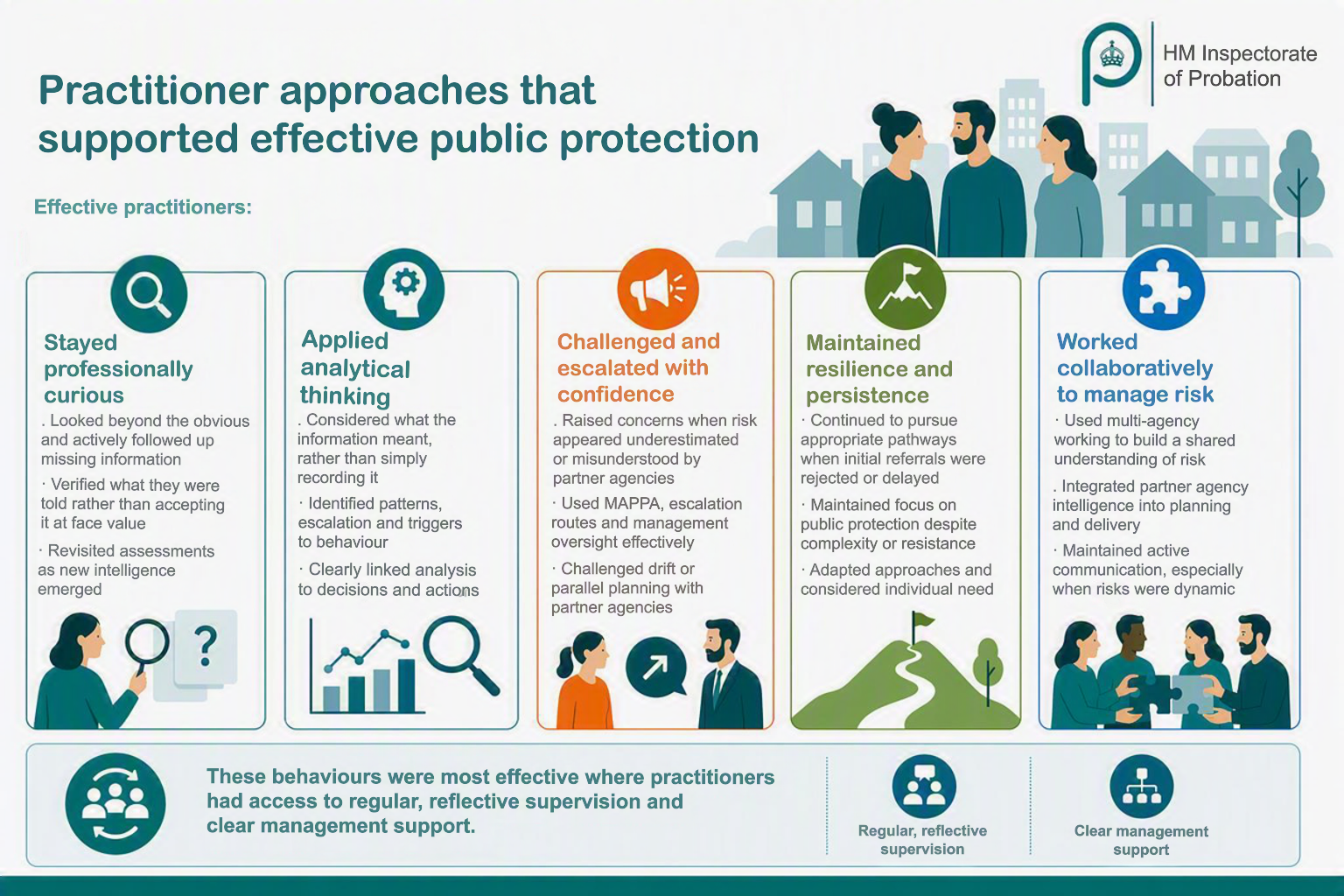
Hear more from HM Inspector Keith McInnis as he reflects on the approaches that inspectors consistently observed in effective practitioners.
Pause and reflect: Staffing
Leaders consider:
- How do we proactively develop staff competence and confidence when faced with resourcing challenges and fast-paced change?
- How do we create conditions for good professional judgement to flourish?
- Does our approach to oversight help practitioners understand why actions matter for public protection, not just what to do?
Practitioners consider:
- How effectively do I use supervision and specialist forums to check my thinking, collaborate with other professionals, and inform assessing and decision-making?
Services (Back to top)
We expected regions to deliver high-quality, evidence-based interventions that were available and accessible to support effective public protection. We looked at how commissioning and contract management arrangements supported public protection outcomes, including how regional leaders drove collaborative working between providers and practitioners.
We examined how information flowed between probation services and other organisations, how risks were communicated, and how interventions were integrated into sentence plans to reduce risk and protect potential victims. We wanted to see services and interventions that were timely and responsive to risk and need.
We also explored how regions ensured that enforcement processes were carried out consistently and in line with public protection aims, and how technology was used to aid risk management.
Addressing risk through targeted commissioning
Background: Birmingham Settlement worked with people in prison, those on remand, and their families to address finance, benefits, and debt needs. Through targeted funding from the West Midlands region, the service supported people across resettlement prisons to improve financial stability before release. This could reduce the risk of homelessness and strengthen protective factors linked to safer resettlement.
Detail: The Regional Outcome and Innovation Fund (ROIF) was used to commission services for groups whose needs were associated with heightened risks of reoffending and poorer outcomes. These included Black, Asian, and minority ethnic men, young adults, neurodiverse individuals, and people in custody experiencing significant debt and financial difficulties.
The commissioning approach recognised the links between financial instability, homelessness, and increased risk. Through ROIF funding, Birmingham Settlement provided targeted pre-release support, preventing 133 people from becoming homeless, clearing more than £3 million of debt, and supporting 195 families.
Impact on public protection: By addressing factors associated with offending and instability, the service helped individuals enter the community with stronger foundations for successful resettlement. It improved release readiness, reduced barriers to compliance and engagement, and provided support to groups disproportionately affected by unmet need.
This example demonstrates targeted commissioning as a core public protection mechanism. When regions commission services informed by local risk profiles, outcome data, and needs analysis, they create conditions where individuals are more likely to succeed.
| What enabled effective practice? | Why it worked |
| Commissioning informed by risk and need | Targeted resources where they could have greatest impact |
| Specialist provision with a focus on outcomes | Addressed barriers linked to offending and developed protective factors |
| Early intervention | Tackled problems before release |
Want to learn more? In our reflections from research series, Professor Fergus McNeill notes that ‘in the long term we secure reductions in risk when we integrate people effectively into society’. Hear more of Professor McNeill’s reflections here.
Community sentence treatment requirements to manage dual diagnosis in Wales
Background: People on probation with both mental health and substance misuse needs often fall between services. Where needs interact, risk to others can escalate, yet individuals may not meet thresholds for single‑pathway provision. This creates gaps in treatment, disengagement from services, and increased public protection concerns.
Detail: Wales made effective use of dual community sentence treatment requirements (CSTRs) to address co-occurring mental health and substance misuse needs. Courts routinely imposed combined requirements where appropriate. Services worked flexibly to respond to changing patterns of need, including shifts in drug use. Providers adapted delivery to ensure that individuals could access support even where complexity would previously have excluded them from treatment.
Impact on public protection: Dual CSTRs improved public protection by ensuring that people with complex, interacting mental health and substance misuse needs were not left without support. Over 12 months, 101 dual orders were made, improving access to treatment for people whose needs may otherwise have fallen between services. This helped reduce destabilising factors linked to risk escalation.
| What enabled effective practice? | Why it worked |
| Commissioning driven by risk and need | Ensured that treatment was available to those at greatest risk |
| Provider flexibility | Responsive to changing patterns of need and improved access to treatment |
| Clear links between treatment and public protection | Reduced factors associated with risk |
Tackling harm and exploitation in London
Background: In Southwark, the community harm and exploitation hub (CHEH) brought together probation services, the police, violence reduction partners, and specialist services to manage serious group offending, violence, and exploitation involving 18–25-year-olds. The consent-based forum worked with young adults who could be victims and/or perpetrators of serious harm, often linked to street gang activity.
Detail: The multi-agency operational group met regularly to share intelligence, review risk, identify victims and wider networks, coordinate safeguarding and enforcement activity, and agree clear actions.
Inspectors observed professional curiosity, effective information sharing, and clear accountability across the partnership. Risks to others, including family members, peers, and neighbours, were identified and acted on promptly, with clear escalation routes into MAPPA, safeguarding, and recall where required.
Impact on public protection: The CHEH approach improved the identification and management of harm through ensuring that risks were clearly understood, interventions were coordinated, and safeguarding actions were timely. Information sharing improved understanding of peer networks, patterns of harm, and victimisation, while regular review ensured that emerging risks were identified and addressed quickly. Victims and potential victims were actively considered in decisions about accommodation, movement, and licence conditions.
| What enabled effective practice? | Why it worked |
| Clear partnership expectations | Resulted in effective accountability and challenge |
| Integrated information sharing | Led to more informed assessment and management of risk |
| Trusting relationships | Improved engagement with people on probation |
Interventions as a core public protection tool
Background: In Yorkshire and the Humber, inspectors noted that interventions teams ‘demonstrated a good understanding of how each intervention could and should contribute to effective risk management.’
Detail: There was a clear strategic focus on strengthening the contribution of interventions to public protection. This was supported by an enhanced programme of training and development for interventions staff, with team meetings and professional development days focused on priority risk themes such as county lines, counter‑corruption, and modern slavery.
Leaders had placed the electronic monitoring portfolio within the interventions remit and actively promoted it as a tool to manage risk and promote desistance. The region also invested in the development of unpaid work supervisors, so they were better equipped to identify emerging risks, monitor behaviour, and escalate concerns on site. A structured recording framework was introduced, providing a simple and consistent way for staff to record and communicate key information and helping to embed a focus on risk across interventions work.
Impact on public protection: This approach helped interventions staff see their role as part of public protection, not separate from it. The focus shifted from attendance and compliance to risk, safeguarding, and emerging concerns. A focus on training and clearer recording meant that staff were better equipped to notice changes in behaviour, share relevant information, and escalate concerns. This improved the contribution of interventions to risk management and gave practitioners better-quality information.
| What enabled effective practice? | Why it worked |
| A risk-focused approach to interventions | Enhanced risk management |
| Investment in staff development | Built capability in responding to risk issues |
Pause and reflect: Services
Leaders consider:
- How confident are you that providers understand their role in public protection not just service delivery? How could this be strengthened?
- Where are partnership arrangements strong at a strategic level but not translating into frontline impact? Critically evaluate any existing barriers and enablers, and consider any structural changes that could improve public protection outcomes in service delivery.
Practitioners consider:
- Am I using information from all relevant services to understand fully the risks in my caseload?
The ASPIRE model of case supervision (Back to top)
‘Contemporary probation practice is based upon the ASPIRE model of case supervision. In our core inspections, we judge the quality of delivery in individual cases against this model’ 4
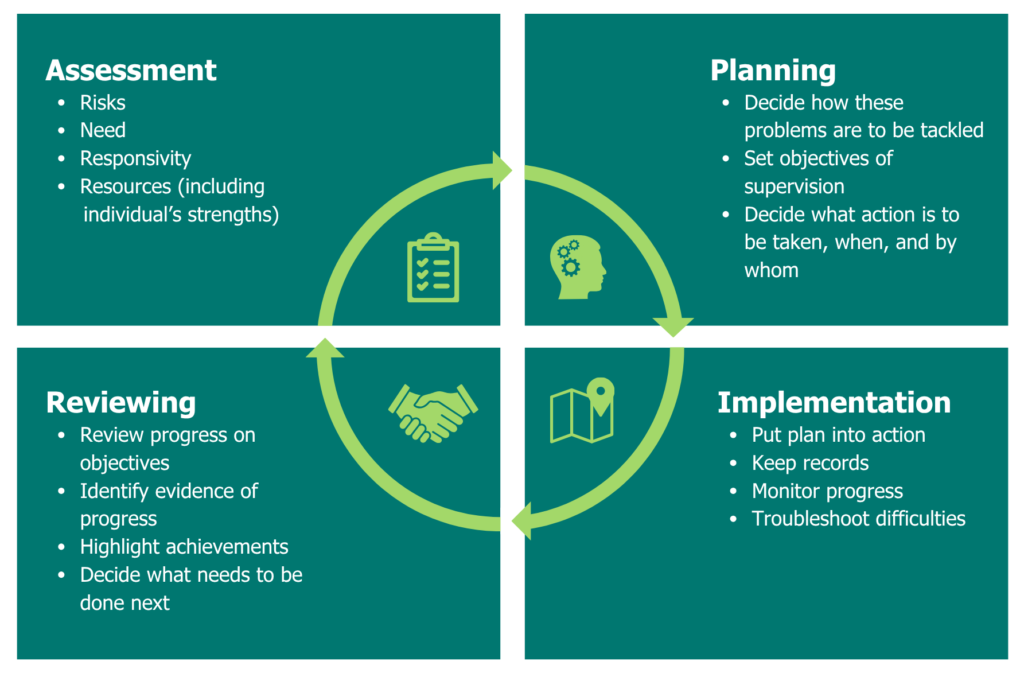
Across the DIPP programme, inspectors used this framework to examine how effectively practitioners identified and managed risks to others. Effective public protection practice was characterised by: the use of high-quality information, professional curiosity, and analysis to assess risk; plans that were proportionate, coordinated, and focused on the most significant risks of harm, with victims clearly considered; timely delivery that combined risk management with opportunities for change; and responsive reviewing that adapted to changing circumstances. Inspection findings highlighted significant variability across all four stages of case supervision. The examples that follow illustrate effective public protection practice across each stage of ASPIRE and highlight the approaches that supported practitioners to achieve positive outcomes.
The importance of good-quality information, analysis, and professional curiosity in assessing
Background: Harry, a 20-year-old man, was sentenced to a suspended sentence order with rehabilitation activity requirement (RAR) days and unpaid work for an offence of violence against an adult male victim. The pre-sentence report author requested police information covering only the previous 12 months. As a result, relevant offending history was missed, and Harry was assessed as posing a low risk of serious harm.
Detail: Following allocation, the probation practitioner reviewed the pre-sentence report and determined with their SPO that the level of risk had been underestimated. A further, more extensive request for police information revealed two violent incidents from Harry’s youth that had not been identified at court. The probation practitioner explored this pattern of behaviour with Harry, who disclosed additional unreported violent behaviour linked to alcohol use. This provided a more complete understanding of his offending behaviour, risks, and relevant triggers.
Impact on public protection: By seeking better-quality information and applying professional curiosity, the probation practitioner developed a more accurate assessment of risk. Harry’s risk to adult men in the community was increased to medium, enabling supervision and interventions to be targeted more effectively.
| How can this learning be used in practice? | |
| Be professionally curious | Check whether the information you have in your cases is sufficient Follow up gaps and discrepancies |
| Think analytically | Look for patterns, triggers, and escalation factors Consider what the information means, not just what it says |
| Engage with people on probation | Explore behaviour, motivation, and context with the person on probation Use conversations to test and refine your understanding of risk |
| Pause and reflect: What information might be missing from one of your current assessments and what practical steps could you take to obtain it? | |
The benefits of collaborative assessment and planning
Background: Phoebe, a 21-year-old woman, was sentenced to a 24-month suspended sentence order with 40 RAR days following her conviction for being involved in the supply of class A drugs. Public protection concerns centred on safeguarding her daughter, particularly in relation to Phoebe’s relationships, substance misuse, and mental health needs.
Detail: At court stage, enquiries confirmed that Phoebe’s daughter was known to children’s services. The probation practitioner made early contact with the social worker, ensuring a full understanding of safeguarding concerns. Risks to the child were clearly identified, while protective factors were carefully considered, resulting in a balanced and defensible assessment.
Information from children’s services, including safety plans, was incorporated into the risk management plan, with clear arrangements for ongoing information sharing and contact. Assessment translated into focused planning, with targeted interventions, appropriate signposting, and active multi-agency involvement throughout. A strengths-based approach, including relapse prevention work linked to substance misuse and mental health, enhanced engagement while maintaining a clear safeguarding focus.
Impact on public protection: Early assessing activity, informed by relevant professionals, provided an accurate understanding of risk. Integrating safeguarding information and protective factors into plans resulted in proportionate, coordinated risk management.
| How can this learning be used in practice? | |
| Work collaboratively | Make early contact with children’s services and other relevant professionals Consider who is involved in the plan and whether they understand their role in it |
| Use good-quality information to inform planning | Ensure that information from partner agencies directly shapes your assessment, sentence plan, and risk management activity Review plans when new information becomes available |
| Balance risk and strengths | Identify protective factors as well as concerns |
| Pause and reflect: Think about a current case involving children or safeguarding concerns. How has information from partner agencies influenced your planning? | |
Planning to promote desistance and keep people safe
Background: Dana, a 39-year-old woman, received a 12-week sentence for shoplifting linked to organised crime. She was eligible for early termination at the point of release. Despite the short supervision period, the probation practitioner quickly identified historic safeguarding concerns through police intelligence, including previous neglect, emotional and physical abuse, and the removal of Dana’s children. Although some of the children had since been adopted, Dana continued to have contact with her daughters, and this required careful planning.
Detail: The probation practitioner quickly convened a professionals meeting involving prison staff, children’s social care services, women’s services, and the police. This ensured that police intelligence informed planning from the outset and that communication was robust.
Planning was deliberately front-loaded to accommodate Reset. Key referrals and risk management actions were completed before release, with clear responsibilities agreed across agencies. The risk management plan was collaborative, child-focused, and supported by targeted services addressing accommodation and wellbeing.
Police intelligence continued to inform decision-making throughout. The probation practitioner maintained active contact with children’s social care services, responded promptly to new information, and secured additional oversight through the integrated offender management free cohort to monitor Dana’s links to organised crime.
Impact on public protection: Timely, well-coordinated planning created strong safeguarding arrangements and a more robust response to risk. This case demonstrates how proactive planning, intelligence-led decision-making, and effective multi-agency communication can support public protection, even within a very short supervision period.
| How can this learning be used in practice? | |
| Plan early with other agencies | Agree roles, responsibilities, and information arrangements from the outset |
| Keep safeguarding central | Consider how children and other potential victims could be affected Ensure that safeguarding considerations shape planning and decision-making |
| Maintain communication | Keep in regular contact with partner agencies Review plans when circumstances change or supervision is ending |
| Pause and reflect: Are there any cases on your caseload where planning relies too heavily on probation activity alone? What could be strengthened through greater involvement from partner agencies? | |
Effective delivery to address risk of sexual harm
Background: Ryan, a 26-year-old male, was sentenced to 36 months’ custody for offences involving a high volume of indecent images of children across multiple devices. He had a diagnosis of autism and one previous conviction for facilitating a child sexual offence.
Detail: The probation practitioner demonstrated an understanding of the risks associated with sexual offending and maintained a clear focus on the factors linked to Ryan’s offending. Joint working with management of sexual and violent offenders (MOSOVO) staff was well established, with regular information sharing, home visits, device checks, and police intelligence informing risk management and decision-making.
Ryan was seen weekly, with supervision focused on online behaviour, relationships, and sexual preoccupation. Relevant disclosures and concerns were shared promptly across agencies, and risk reviews remained active and responsive throughout.
The probation practitioner also addressed factors linked to Ryan’s wellbeing and offending, including isolation, depression, and anxiety. Support was tailored to meet his needs, with programme materials adapted to account for his autism and close liaison with partner agencies to support safe decision-making and engagement.
Impact on public protection: Delivery in this case was timely, responsive, and linked to identified risk factors. Adjustments to meet Ryan’s needs enhanced engagement. As a result of consistent, multi-agency collaboration, the probation practitioner could identify emerging risks quickly and act without delay. This coordinated delivery developed protective factors and contributed to effective risk management.
| How can this learning be used in practice? | |
| Work closely with partner agencies | Build regular contact with key partners such as MOSOVO Share information promptly and use it to inform decision-making |
| Tailor your approach | Adapt supervision and interventions to the person’s needs Consider what will help them engage safely and effectively |
| Pause and reflect: Think about someone on your caseload who finds it difficult to engage. What adjustments could you make to your approach to improve engagement while maintaining a focus on risk management? | |
Responsive reviewing that promotes public protection and desistance
Background: Anthony, a 46-year-old male, was sentenced to 32 months in custody for sexual communication with a child (decoy) online. On release, he was managed on licence and subject to a sexual harm prevention order and registration requirements. Licence conditions appropriately restricted internet access, relationships, and contact with children under 18.
Detail: Inspectors assessed reviewing activity as effective. When Anthony entered a new relationship and asked to stay at his partner’s address, the probation practitioner responded promptly with professionally curious discussions, joint work, and home visits with the MOSOVO, and appropriate disclosure of his offending to safeguard others. The probation practitioner also reviewed employment opportunities proactively, consulting with MOSOVO and the public protection unit to ensure suitability. Regular liaison with partner agencies and ongoing supervision discussions ensured that new information was identified and acted on promptly.
Impact on public protection: The probation practitioner maintained an accurate and up-to-date understanding of risk through effective information sharing and proportionate responses to emerging concerns. This resulted in dynamic risk management and safe progression during Anthony’s licence period.
| How can this learning be used in practice? | |
| Be confident, curious, and analytical | Use multiple sources to strengthen your understanding of risk Question what information is telling you about a situation |
| Develop effective relationships with partner colleagues | Focus on timely information sharing, joint working, and effective communication |
| Pause and reflect: Think about a recent decision you made when reviewing one of your cases. What information gave you confidence that your decision was the right one? | |
Proportionate reviewing to support defensible decisions
Background: Tanya, a 29-year-old female, was subject to a 12-month community order with RAR days and a mental health treatment requirement following a common assault on her mother. There was a background of familial domestic abuse and mental health, alcohol, and neurodiversity-related needs.
Detail: The probation practitioner increased Tanya’s risk level to high when she began living with her mother, who was the victim of the index offence. Home visits and additional police enquiries were also completed to give the probation practitioner a better insight into that living arrangement. Relevant information about risk and need was shared with the mental health worker and women’s service to enable a joined-up approach from each agency. When Tanya later secured her own accommodation and moved away from the family home, the probation practitioner completed a further review and reduced the risk level to medium. Both decisions were recorded in the formal assessment and management oversight entries, with a clear rationale linked to the change in living circumstances.
Impact on public protection: This demonstrated proportionate and defensible reviewing practice. Risk of serious harm was reviewed actively and responsively, with the level raised and later reduced in line with verified changes in circumstances. Liaison with other professionals working with Tanya, and home visits allowed the practitioner to monitor Tanya’s living arrangements, relationship with her mother, and use of alcohol.
| How can this learning be used in practice? | |
| Maintain a clear focus on the victim | Think about access to victims when circumstances change Have the victim at the centre of your planning and delivery |
| Gather information proactively | Use home visits, partner information, and professional conversations when reviewing risk Be prepared to increase or reduce risk levels and activity when circumstances change |
| Pause and reflect: Think about a recent review you completed. If someone else read your review, would they understand why you made the decisions you did? | |
Pause and reflect: Effectiveness in case management
Leaders consider:
- How do we promote confidence, professional curiosity, and analytical reflection in our staff to deliver the best case management across ASPIRE?
Practitioners consider:
- What information do I rely on most heavily when assessing risk, what might be missing, and how critically do I analyse new information as it becomes available?
- How effectively am I using information, analysis, and partnership working to understand risk, coordinate protective action, and show evidence of the impact of my work?
Professional curiosity (Back to top)
Professional curiosity helps practitioners determine whether the information available is enough to understand risk and need. Checking assumptions, noticing gaps, and verifying information are all key elements of this curiosity. In public protection work, this can reveal important information about victims, relationships, patterns of behaviour, or changes in circumstances. It also depends on the conditions around practice. Reflective supervision, purposeful oversight, and access to partner information give practitioners space to think critically, recognise bias, and act on what they find. Used well, professional curiosity supports more accurate assessment and better-informed decisions.
The importance of professional curiosity at all grades when reviewing a case transfer
Background: Tariq, a 47-year-old Malaysian national, was serving a 24-month suspended sentence for engaging in sexual communications with a child. When his case transferred to a new PDU, the receiving practitioner identified significant gaps in the information available to assess and manage risk.
Detail: The probation practitioner took proactive steps to enhance the risk assessment, including an unannounced home visit, liaison with children’s social care services, attendance at child-in-need meetings, and making enquiries with the Home Office and police regarding Tariq’s immigration status.
Following transfer, the receiving SPO also reviewed the case and Tariq’s MAPPA status, completed a case discussion, and set clear actions. This identified gaps in public protection arrangements, risk assessment, and multi-agency working. As new information emerged, the probation practitioner updated the risk assessment and adjusted supervision and sentence planning accordingly. This demonstrated reflective and analytical practice from both the practitioner and the SPO.
Impact on public protection: Professional curiosity, effective oversight, and a sense of ownership significantly improved the quality of public protection arrangements. The case demonstrated how practitioners and managers can improve safeguarding and risk management by reviewing cases critically and asking the right questions.
| How can this learning be used in practice? | |
| Take ownership of transferred cases | Review new cases critically and identify any gaps in information, assessment, or risk management |
| Use multiple sources to inform your understanding | Follow up uncertainties, inconsistencies, and missing information before relying on previous assessments |
| Use management oversight effectively | Seek challenge, guidance, and support when information is unclear or concerns emerge |
| Pause and reflect: Think about the most recent case allocated to you. What additional enquiries helped, or could have helped, develop your understanding of that case? | |
Want to learn more? This paper by Jake Phillips, Sam Ainslie, Andrew Fowler, and Chalen Westaby focuses on the concept of professional curiosity, its application within probation, and the implications for good-quality practice. Academic Insights – Putting professional curiosity into practice.
HM Inspectorate of Probation has previously published Effective practice guide: Practitioners – professional curiosity insights (adult services) and Middle manager: professional curiosity insights guide.
Child safeguarding (Back to top)
Child safeguarding is central to effective public protection practice. Where children may be directly or indirectly affected by offending, practitioners must identify and share risk information early and consider the child’s lived experience in their decision-making. Inspectors found that practice was strongest where practitioners used professional curiosity, worked closely with children’s services and other partners, and ensured that safeguarding considerations shaped practice.
Safeguarding at every stage of case management
Background: Aaron, a 32-year-old man, received a 24-month suspended sentence order with RAR days following a non-contact sexual offence involving images of child sexual abuse. He had contact with his own children and his brother’s children, making safeguarding a central consideration throughout the sentence.
Detail: The probation practitioner identified discrepancies in initial children’s social care services checks and followed these up to establish an accurate understanding of safeguarding considerations. They liaised with social workers for both groups of children, shared assessments, and obtained additional information from the MOSOVO so that all relevant professionals understood the risk concerns, protective factors, and safety arrangements. Assessment, planning, and delivery were coordinated across probation services, children’s social care services, and the police. Restrictions on contact with children were combined with rehabilitative work such as Maps for Change, while ongoing liaison and joint home visits ensured that safeguarding arrangements remained under review.
Impact on public protection: Risks to identifiable children were managed effectively through coordinated multi-agency working. Safety planning was actively monitored, interventions were delivered as intended, and risk management remained responsive to changing circumstances. At the six-month review, the probation practitioner sought views from key partners before recording a clear rationale for reducing the risk level from high to medium.
| How can this learning be used in practice? | |
| Think beyond the immediate household | Consider all children who may be affected by the person’s behaviour, not just those they have parental responsibility for |
| Coordinate safeguarding activity | Share information with relevant professionals and ensure that everyone understands their role in managing risk |
| Take a multi-agency approach to assessing and planning | Draw on information from all relevant professionals to develop a comprehensive understanding of risk |
| Pause and reflect: Think about a current case involving children. If you had to explain your safeguarding thinking to another professional today, what evidence would you rely on? What gaps remain? | |
Recognising risk before birth: Effective action to safeguard an unborn baby and its mother
Background: Amy, a 33-year-old woman, received a 12-month suspended sentence order with 30 RAR days for shoplifting. She had a significant offending history, including hate crime, weapons offences, and battery. Her four children were subject to adoption or guardianship arrangements following concerns about offending, substance misuse, and domestic abuse.
Detail: When the probation practitioner learned that Amy was pregnant in the early stage of the order, they made an immediate multi-agency safeguarding hub (MASH) referral, prompting early involvement from children’s social care and maternity services. As concerns escalated from child in need to child protection, the probation practitioner maintained regular contact with social care services and the midwife, attended safeguarding meetings, and contributed information to child protection processes.
The probation practitioner also demonstrated professional curiosity about Amy’s new partner, seeking information from police and probation colleagues, submitting a Clare’s Law application, and ensuring that his involvement in the family was considered within safeguarding arrangements. Alongside this, the probation practitioner worked closely with substance misuse and housing services and maintained ongoing communication with professionals as new information emerged.
Impact on public protection: The early referral ensured that safeguarding concerns for both Amy and her unborn baby were identified and acted upon quickly. Effective information sharing allowed agencies to understand historical and emerging risks, including those linked to substance misuse, domestic abuse, and Amy’s new relationship. The practitioner’s actions strengthened the professional understanding of the context in which Amy and the baby lived and ensured that probation information informed wider safeguarding activity.
| How can this learning be used in practice? | |
| Act early when risks to children are identified | Prompt MASH referrals and effective information sharing can prevent risks from escalating |
| Be professionally curious about family and relationship dynamics | This can identify wider contextual risk and ensure that these are considered within safeguarding arrangements |
| Coordinate work with specialist services | Address factors linked to vulnerability and develop protective support for parents and the children |
| Pause and reflect: Choose a case. Who or what might be sitting outside your current view of the case, and what enquiries would help you understand the wider risk picture? | |
Pause and reflect: Child safeguarding
Leaders consider:
- How well do our systems, partnerships, and supervision arrangements support practitioners to identify child safeguarding concerns early, share information confidently, and maintain a clear focus on safeguarding children?
Practitioners consider:
- How well do I identify who may be affected by the person’s behaviour, including unborn babies, children outside the household, and children in wider family networks?
- How confident am I to use professional challenge with other professionals, rather than accept incomplete information or decisions I disagree with?
Want to learn more? Professor Michelle McManus reflects on safeguarding and public protection as a collective responsibility, emphasising the importance of professional curiosity, multi-agency working, and learning from what works well to keep people safe. The ‘12Cs’ collective safeguarding responsibility model (Ball and McManus, 2023) sets out 12 key components which facilitate effective multi-agency safeguarding practice, encompassing distinct yet interlinked issues relating to ‘practitioners and agencies’, and those relating to ‘structures and processes’. The accompanying self-assessment tool was co-created to assist safeguarding arrangements in recording, evaluating, and monitoring the progress of any policy or element of practice across each of the 12 components.
The child safeguarding practice review panel has developed a range of resources designed to support effective safeguarding practice. These include Safeguarding vulnerable under ones. Pre-birth planning and The myth of invisible men: Safeguarding children under 1 from non-accidental injury caused by male carers.
HM Inspectorate of Probation has developed a set of reflective resources to prompt individual and group discussions about child safeguarding:
Effective practice through MAPPA (Back to top)
Published data shows that the MAPPA cohort supervised by probation services continues to grow, year on year. In our DIPP inspections, 32 per cent of cases were subject to MAPPA, with 59 per cent managed at MAPPA Level 1.
Where MAPPA was used effectively, we saw clear, analytical decision-making to set appropriate management levels and clear consideration about the added value that multi-agency arrangements would bring to managing risk. Practitioners drew on information from partner agencies to develop a well-rounded understanding of risk, and this intelligence informed all elements of ASPIRE. MAPPA processes were used as an active mechanism to share information, strengthen oversight, and coordinate responses, with clear roles and responsibilities, and a focus on responding dynamically to changing circumstances.
Effective MAPPA level 1 management and communication
Background: Simon, a 59-year-old man, received a custodial sentence for possessing indecent images of children. On release, he was assessed as posing a medium risk of sexual harm to children, including a potential risk to his great-nephew. His probation practitioner was nearing the end of Professional Qualification in Probation (PQIP) nearing the end of training, had recently completed specialist learning, and was managing their first MAPPA Category 1, Level 1 case.
Detail: The probation practitioner completed a clear assessment that identified the nature and pattern of Simon’s sexual offending, with children recognised as the primary group at risk. They worked with children’s services and MOSOVO police to verify information, clarify safeguarding arrangements, and ensure that risk information was understood and acted on across agencies. A MAPPA screening was completed before release, informed by police and social care professionals, to ensure that the MAPPA level was accurate.
The probation practitioner used MAPPA processes actively at Level 1. A MAPPA J form was shared with the Department for Work and Pensions to set out risks and restrictive conditions, and was updated promptly when a new probation practitioner took over the case. MAPPA information request forms were used at key points to obtain clear information from professionals. Regular liaison with MOSOVO police helped the practitioner monitor Simon’s compliance with restrictive conditions and internet activity. The MAPPA level was formally reviewed at key points, with partner responses informing defensible decision-making.
Impact on public protection: This case demonstrates the value of proactive MAPPA Level 1 management. Timely information sharing and coordinated planning meant that agencies held accurate and current risk information. Concerns about Simon’s great-nephew were identified, verified, and acted on, supporting robust safeguarding arrangements. The practitioner’s work showed that, with relevant training, active oversight, and effective partnership working, MAPPA Level 1 can provide meaningful public protection.
| How can this learning be used in practice? | |
| Use MAPPA Level 1 actively | Use the Level 1 process to share information, clarify risk factors, and support coordinated work with other professionals |
| Seek support when needed | Use your SPO, MAPPA team, or specialist colleagues to build confidence and develop decision-making |
| Build effective agency relationships | Maintain regular communication with the police and other partners, so that concerns are identified and acted on quickly, and risk management is shared |
| Pause and reflect: Think about your approach to MAPPA-eligible cases. How are you using MAPPA arrangements to strengthen risk management, rather than simply recording the level? Take time to focus specifically on your approach to Level 1 cases. | |
The impact of coordinated MAPPA Level 2 management
Background: Craig, a 42-year-old man, was on licence following an attempted rape offence. He was recalled because of offence-paralleling behaviour and re-released to a residential setting that could support his needs, linked to autism and learning disability. The case was managed at MAPPA Level 2 and allocated to a practitioner with MAPPA experience.
Detail: Although inspectors identified some weaknesses in assessment, practice improved once the case was managed through MAPPA Level 2. Planning, delivery, and review were well coordinated across probation services, residential staff, occupational therapy, psychology, and social work staff, and MOSOVO police.
Release planning was robust and tailored to Craig’s behaviour and needs. Risk management and contingency plans drew on previous concerns, with restrictions and monitoring arrangements clearly linked to risk. These were discussed before release, so that partner agencies understood their roles and how concerns should be escalated.
Delivery remained focused on public protection while recognising that standard interventions were unlikely to be suitable because of Craig’s learning needs. The probation practitioner adapted their approach to supervision, and partners worked together to explore alternative interventions. Residential staff played an active role in monitoring behaviour and sharing concerns, including emerging impulsive behaviour from Craig. Regular MAPPA review helped agencies respond quickly as risks changed.
Impact on public protection: MAPPA Level 2 arrangements provided structure, oversight, and clear communication in a complex case. Each agency understood what it needed to do, when concerns should be escalated, and how risks would be managed. This led to coordinated action, timely escalation, and responsive risk management, even where intervention options were limited.
| How can this learning be used in practice? | |
| Prepare for release as early as possible | Agree restrictions, contingency plans, and agency roles before release |
| Take a joined-up approach to planning and delivery through MAPPA Level 2 arrangements | This will enable professionals to be responsive, with risk information and escalation routes clear to all professionals |
| Develop practitioner confidence in the MAPPA arena | Exposure to MAPPA as a trainee, regular experience post-qualification, and developmental feedback from the line manager and MAPPA coordinator will help practitioners use MAPPA arrangements effectively and confidently |
| Pause and reflect: How confident are you that your most complex cases are being managed collaboratively? What evidence supports your view? | |
Pause and reflect: MAPPA
Leaders consider:
- What assurance do we have that practitioners understand the added value of MAPPA Level 1, and know when escalation to higher-level arrangements is needed?
Practitioners consider:
- When I am unsure about MAPPA thresholds or processes, how quickly do I seek advice, use guidance, or involve my manager?
- How well do I use MAPPA discussions, forms, and information requests to develop a fuller understanding of relevant risks and inform my decision-making?
Hate crime (Back to top)
Learning from effective practice in hate crime cases
As part of our inspection work, we explored the management of people on probation whose offending was linked to hate crime. Inspectors looked for evidence that assessments identified hate-based behaviour, analysed the attitudes and beliefs underpinning it, and considered how this affected risk to others. We also looked for constructive and restrictive interventions that addressed both the behaviour and its motivation.
Practitioners were often working with complex identities, motivations, and risks. Many told us that they did not feel sufficiently skilled or confident in this area, largely due to gaps in specialist training, limited guidance, and a lack of accessible resources. Despite these challenges, inspectors saw elements of effective practice across several cases. The examples below show how this practice was reflected across assessment, planning, and delivery.
Assessing: Understanding motivation and attitudes
Case A: Matthew
Although the index offence was not classified as a hate crime, the assessment clearly recorded that Matthew held deeply concerning views about migrants and minoritised groups. The probation practitioner appropriately assessed that ethnic minority staff and members of the public were at risk because of Matthew’s views and use of racist language.
Case B: Bobby
The probation practitioner analysed the racially aggravated harassment index offence alongside previous discriminatory language and attitudes, including antisemitic comments towards Bobby’s ex-wife. This helped identify a pattern and persistent use of hate-based behaviour, the groups who might have been at risk, and the factors linked to future harm.
Case C: Sam
The assessment considered Sam’s childhood experiences and early exposure to racist views. The probation practitioner explored how these views had developed and how they were linked to his offending behaviour.
Planning: Protecting victims of hate crime
Case D: Jack
There was good management of Jack’s licence conditions and restrictive interventions, including non-contact provisions for victims of hate crime and an exclusion zone to support public protection.
Delivery: Challenging attitudes and behaviour in supervision
Case E: Michael
Hate-related concerns were addressed through open discussions in supervision, where the probation practitioner actively challenged Michael’s inappropriate views and explored the underlying thinking behind them. Police also provided intelligence in relation to Michael’s views and other relevant offending, contributing to the overall understanding of risk.
Case F: Ricky
The probation practitioner discussed Ricky’s discriminatory attitudes and views with him to understand how far they influenced his behaviour. The probation practitioner also engaged in meaningful discussions with Ricky about culture, diversity, and inclusion.
Impact on public protection: These examples show that effective hate crime practice depends on practitioners recognising hate-based behaviour as a relevant feature of risk. Where practice was stronger, practitioners identified who might have been harmed, used intelligence to understand patterns and motivation, and combined protective restrictions with direct work in supervision. This helped practitioners approach complex discussions and risk management decisions feeling informed and confident.
| How can this learning be used in practice? | |
| Explore attitudes and motivation, and address hate-based behaviour directly | Use supervision to challenge discriminatory attitudes, and explore their impact on others |
| Use restrictions and interventions effectively | Combine protective measures with constructive work to reduce risk of harm |
| Pause and reflect: Which feels more challenging in your practice: discussing the offence, or discussing the beliefs that may have influenced it? Why? | |
Pause and reflect: Exploring hate-based behaviour
Leaders consider:
- How do we promote the skills that practitioners need to engage in sensitive, culturally competent discussions with those they supervise?
Practitioners consider:
- How confident do you feel in identifying and analysing hate-related motivations within offending behaviour?
- What evidence do you rely on to distinguish hate-related offending from other forms of violence or abuse?
- How do you create space for honest conversations about prejudice, identity, and belief?
Conclusion (Back to top)
Public protection work is complex, and risk can never be removed entirely. The examples in this spotlight show that effective practice depends on more than individual skill or commitment. Practitioners need access to good information, time to analyse what it means, and supervision that supports confident decision-making. Managers need to use oversight to improve practice, not simply check whether tasks have been completed. Leaders need to create systems that make timely information sharing, clear accountability, and meaningful partnership working part of routine practice. Where these conditions were in place, public protection work was more effective. We encourage readers to use these examples as a prompt for honest discussion about what is helping public protection work locally, what is getting in the way, and what can be improved.
References and acknowledgement (Back to top)
This Effective Practice Spotlight is based on information sourced while undertaking our Dynamic Inspection of Public Protection across England and Wales. The manager responsible for this inspection programme is Simi O’Neill. Helen Cox, Effective Practice Lead, has drawn out examples of effective practice from the inspections completed. These are presented in this spotlight to support the continuous development of public protection across the service. We would like to thank all those who participated in any way during the inspection, and especially those who have contributed to this spotlight. Without their help and cooperation, the inspections and Effective Practice Spotlight would not have been possible.
Footnotes (Back to top)
- House of Commons Justice Committee (2022). IPP sentences. ↩︎
- Dynamic inspection of public protection in East Midlands region. ↩︎
- Reconnect is an NHS care after custody service that seeks to improve the continuity of care of people leaving prison. ↩︎
- Supervision of service users – HM Inspectorate of Probation ↩︎