An inspection of St Catherine’s Priory, Approved Premises
Foreword (Back to top)
St Catherine’s Priory (SCP) approved premises (AP) plays a vital role in protecting the public and supporting individuals as they transition from custody into the community. During our inspection, we found SCP to be a welcoming and professionally run service, with a strong emphasis on public protection and resident safety. The leadership team had cultivated a positive culture, and staff were observed to be respectful, diligent and committed to their roles. Residents told us they felt safe and supported, and we saw some evidence of effective joint working with external agencies to meet residents’ needs and manage the risks they posed.
SCP was rated ‘Good’ overall, with an ‘Outstanding’ rating for public protection.
However, the inspection also highlighted areas requiring improvement, particularly in relation to staffing and rehabilitation. Persistent staff shortages had impacted the AP’s ability to deliver a full rehabilitative offer and, while managers had rightly prioritised safety and public protection, there was now a need to strengthen the support available to residents to help reduce reoffending. We also identified issues with room sharing, pre-arrival contact and access to mental health services, which should be addressed to improve the resident experience.
Despite these challenges, SCP has demonstrated resilience and a clear commitment to continuous improvement. I commend the staff and leadership team for their dedication and professionalism, and I hope this report supports them in further enhancing the quality of provision at SCP.
Martin Jones CBE
HM Chief Inspector of Probation
Background information (Back to top)
| Total number of Approved Premises nationally | 104 |
| Length of time on site by inspectors, including out of hours activity | 2 days |
| Total number of bedrooms in St Catherine’s Priory | 21 |
| Average length of residents’ stay at SCP | 50 days |
Nationally
APs provide 24-hour monitoring and supervision to their residents and are expected to engage them in interventions to reduce the likelihood of further offending. There are 104 APs in England and Wales. Most are for men only, with eight for women only. Twelve are psychologically informed planned environments (PIPEs),
co-commissioned with NHS England. Fourteen APs are independent, including five of the eight APs for women. These are led mostly by third sector providers. Independent APs (IAPs) are delivered under contract and in partnership with HM Prison and Probation Service (HMPPS).
Locally
SCP AP in Guildford is part of the South East and Eastern AP region. It is a
self-catered AP and has a maximum occupancy of 21 men, aged 18 and over. There are nine single and six double occupancy rooms split across three buildings. The AP provides a kitchen facility for residents to prepare their own meals. At the start of our fieldwork, there were 13 residents, but this number fluctuated during the week due to planned departures and new arrivals.
Our inspection methodology
We inspected SCP during the week beginning 27 October 2025. This included the
off-site inspection of eight cases relating to individuals who were either still resident at the AP or who had recently departed. While carrying out on-site fieldwork, we observed practice and interviewed managers and staff, individually and in groups. We also received feedback from seven current residents about their experiences at SCP. Our fieldwork also included the AP’s ‘out of hours’ activities – specifically, the early morning and evening shift handover processes and a detailed analysis of recent enforcement and recall decisions.
Ratings (Back to top)
| Fieldwork started October 2025 | Score 9/15 |
| Overall rating | Good |
| Standard | Score | Rating |
| Leadership | 2 | Good |
| Staffing | 1 | Requires improvement |
| Safety | 2 | Good |
| Public Protection | 3 | Outstanding |
| Rehabilitation | 1 | Requires improvement |
Recommendations (Back to top)
As a result of our inspection findings, we have made the following recommendations that we believe, if implemented, will have a positive impact on the quality of services delivered at St Catherine’s Priory.
The St Catherine’s Priory leadership team should:
- maximise external agency involvement to deliver a planned and structured programme of rehabilitative activities. This should include an exploration of opportunities to work with partners in the local area to improve access to mental health services for residents
- adapt the kitchen facilities to meet religious and cultural needs, including separate preparation areas and storage for halal food, to prevent contamination
- strengthen staff training in neurodiversity, mental health and the impact of different medications.
His Majesty’s Prison and Probation Service should:
- urgently complete the review of staffing, resourcing and recruitment procedures for APs, to promote safe and rehabilitative practice
- develop evidence-based guidance for room-sharing arrangements, informed by research, to ensure that residents are treated with decency and fairness as they transition from custody into the community
- investigate and communicate the underlying reasons for the high volume of short-notice placements to enable better understanding and future planning. The Central Referral Unit should also collaborate with AP colleagues within regions, to problem solve and improve relationships
- assure itself that the national policy for welfare checks and roused responses is conducive to ensuring residents’ general well-being and that it is being implemented appropriately in all APs.
Leadership and governance (Back to top)
| Leadership and governance drive the delivery of a high-quality service. | Rating |
| Good |
Strengths:
- Leaders promoted a positive culture. The AP had a warm and welcoming atmosphere, and leaders set clear priorities for staff centred on the provision of effective public protection and ensuring the wellbeing and safety of residents.
- Residents expressed generally positive views about the AP, its atmosphere, and the support provided by staff. All residents interviewed by inspectors felt safe.
- In our observations of both formal and informal interactions with residents, staff were professional, warm and respectful.
- There was collaboration with various organisations and agencies to manage risks and ensure access to interventions and support for residents. These included:
- a local food bank and the provision of food bank vouchers to residents who were struggling to budget or source food for themselves. This was particularly important at SCP due to its status as a self-catered AP
- the regional homeless prevention team manager. An accommodation officer from the local probation delivery unit (PDU) attended the AP monthly to provide accommodation advice and support to residents
- the Useful Wood Company, a local charity that provided volunteering opportunities to those struggling to access the job market
- i-access, the local drug and alcohol service. Staff regularly made referrals on behalf of residents
- Change, Grow, Live (CGL)the substance misuse provider, which had recently attended a meeting at the AP. Managers were hoping to secure a longer-term agreement for CGL to deliver interventions for residents from SCP
- the local OPD team who provided the weekly wellbeing group for residents, in addition to the support offered to staff.
- All residents were registered at the same local doctor’s surgery and managers met their staff regularly to ensure that information sharing was adequate and processes ran smoothly. Provision was also maintained with a local pharmacy which responded to prescription requests and delivered medication to the AP as required.
- There were good relations with the high harm perpetrator unit (HHPU) within Surrey Police and managers sent a weekly briefing to them updating them about the current resident population and their risks. This communication was aimed at contributing to the wider community safety approach within Guildford.
- Staff welcomed resident feedback, and a number of initiatives had been implemented by managers to gather and respond to suggestions for service improvement. Initiatives included:
- a weekly residents meeting
- a feedback form devised specifically for SCP. Managers reviewed the feedback and aimed to respond, where possible, to requests from residents
- a monthly manager’s coffee morning which was a drop-in for residents to meet the managers and raise any issues they wished.
- There was a comprehensive business continuity plan which was overseen by the managers. Risks to delivery were fully understood. The most significant challenges were staff vacancies and recruitment and retention which were problematic.
- There was a performance-focused culture within the AP and national service level measures were being achieved by SCP. Managers were diligent and issued weekly reminders to support staff to achieve national timeliness expectations for key tasks. This was particularly helpful to staff given the enduring staffing issues and helped to maintain SCP’s reputation as a high performing AP.
- We found an appropriate level of oversight in the cases inspected, with a management footprint visible in enforcement decisions, instances of escalating risk, and the countersigning of key documentation such as residence plans and safety and support plans (SaSPs).
- There was a clear meeting structure in place both regionally and at SCP, encompassing a range of monthly management, performance and team meetings. These meetings were designed to keep staff informed of practice developments and to foster continuous learning through reflection and team-based discussion. In recognition of the different shift patterns and the importance of all staff receiving consistent messaging, team meetings were delivered twice, so that those unable to attend one could attend the other.
Areas for improvement:
- Although management had clarified SCP’s priorities for staff, there was no documented vision for the AP. A collaborative exercise had started between managers and staff to create a vision for SCP.
- It was acknowledged at a regional level that, given significant staffing challenges, SCP was not in a position to deliver the best possible rehabilitation offer and so a decision was made to prioritise public safety and the safeguarding of residents. This was appropriate in the circumstances.
- Although a case quality checklist had been devised by the managers, it was not yet being used routinely.
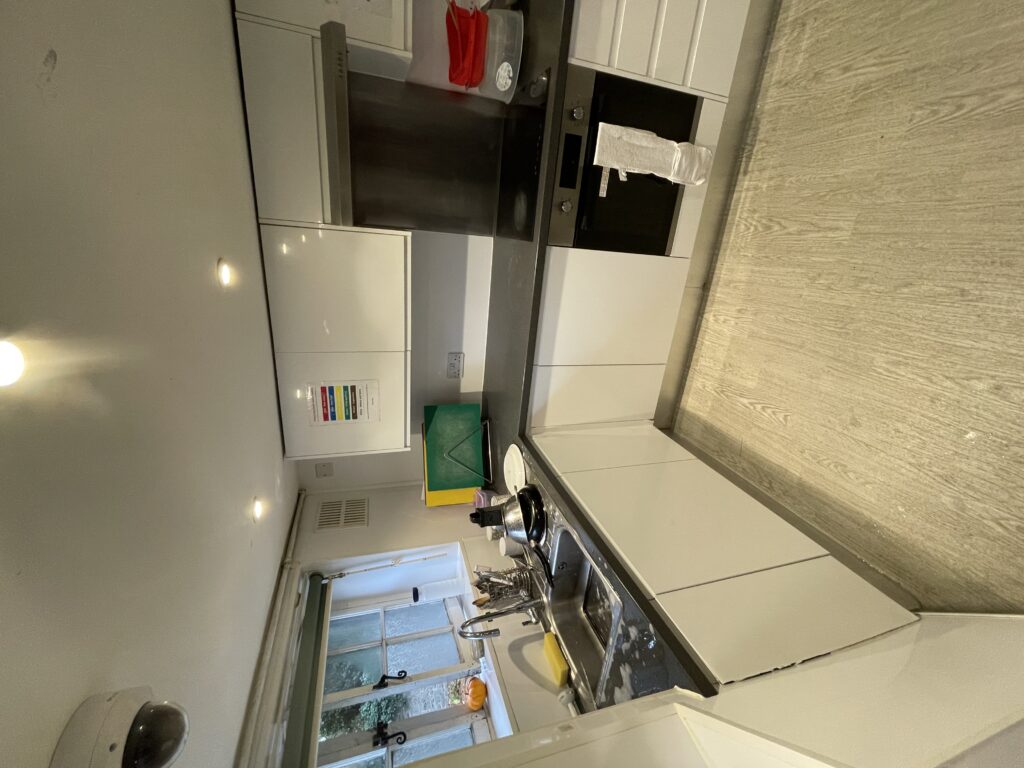
- The kitchen at SCP was only partially adapted for those who required separate food preparation equipment due to their religious beliefs. Although there were separate kitchen utensils and cutlery, residents did not have separate cooking devices or storage. This could be easily rectified and should be actioned as soon as possible.
- Although SCP had a diverse staff group which was beneficial for residents in promoting their sense of belonging and providing support, some staff highlighted that they would benefit from more training and development in working with neurodiversity and mental health.
Staffing (Back to top)
| Staff are enabled to deliver a high-quality service for residents. | Rating |
| Requires improvement |
Strengths:
- Staff were engaged, motivated and proud to work at SCP. Although the team appropriately highlighted the staffing situation as a problem, they emphasised their passion for their roles and enjoyed working at SCP.
- The AP manager role was shared by two part-time senior probation officers (SPOs). This job share arrangement had been a feature of SCP’s management structure for a number of years, including before the current SPOs came into post. There were potential risks with this arrangement in terms of consistency of leadership and messaging, continuity of decision making and ensuring stability within the fast-paced AP environment. However, the structure was generally working well at SCP and the managers had a robust handover system in place, worked well together and scheduled days at least once a month when they would both be present on site.
- The managers emphasised to inspectors their appreciation of staff and highlighted their ‘can-do’ attitudes and strong teamwork values. The management team fully acknowledged how motivated and hard working the team were.
- The managers ensured that staff undertook the mandatory training offer for new AP staff and also arranged shadowing and observation opportunities with more experienced staff when individuals were new in post. Additional supervision was provided to new staff members to allow for more regular discussion and reflection on their development and progress.
- Management operated an open-door policy and were approachable and caring. Formal and structured supervision was provided at least every two months, and a template was used to structure these meetings and to maintain consistency across the staff group. Both AP managers were positive about the level of informal and formal support and supervision provided by senior management. The area manager was approachable, visible and
hands-on and the managers appreciated this approach and their availability to help problem solve through difficult situations.
- The OPD pathway lead attended the AP monthly to provide staff with a structured reflective space, and to support the development of their skills and understanding of working with individuals with complex needs.
- Given the relatively small staff team at SCP, managers were able to observe the practice and conduct of staff during routine operations. This informal oversight enabled them to identify strengths and areas for development, which were then addressed through supervision.
- Case recording was generally strong in the reviewed cases, with visible evidence of management oversight in most cases. SCP could further enhance its quality assurance processes by consistently applying the existing auditing template.
- Managers were proactive in managing staff sickness, making reasonable adjustments for individuals when required. We were provided with examples of management identifying and addressing poor staff performance in line with relevant human resource policies.
- The inspection team was impressed with the level of knowledge and competence displayed by the SCP team during our fieldwork. A review of recent enforcement, recall decisions and staff response to positive drug and alcohol testing by the inspection team evidenced the staff team’s ability to assess, manage and escalate emerging risks within the AP. We observed morning and evening handovers and noted the diligence and level of professional curiosity displayed by staff and the actions taken to respond to issues. These meetings were thorough, both in their delivery and
post-meeting recording.
Areas for improvement:
- Although SCP worked to the national AP staffing model, with two residential workers (RWs) on site at any one time and two probation service officers (PSO)/key workers, there were vacancies in both staff groups: a part-time PSO vacancy and two full-time RW vacancies. Management recognised resourcing as a significant problem and the impact that insufficient staffing was having on morale and the quality of provision – particularly in relation to the delivery of rehabilitative activities. The team’s concerns had been appropriately escalated at a senior level.
- Resource management within SCP was complex and a significant amount of time was spent by the managers and AP administrator coordinating rotas and arranging cover for periods of annual leave and sickness. This task was made all the more onerous within SCP by staff vacancies.
- The recruitment and retention of staff in this area of the country was known to be very difficult. High living costs and close proximity to London – without the additional pay – often meant that people would rather work in locations that received the ‘London weighting’ and SCP had been experiencing these difficulties for many years. Moreover, recruitment processes were slow and frustrating for the management team and not conducive to achieving safe staffing levels in a timely way. National decisions still needed to be made to address these problems and to ensure safe staffing levels in all APs. Prior to our fieldwork, there had been two recent RW resignations and the team at SCP was understandably anxious about whether these positions would be filled.
- The team was transparent about the areas of practice with which they would appreciate further development and support: additional training on working with neurodiversity and mental health and the uses and impact of different medications.
- Although managers had created a quality assurance template to support casework auditing, it was not being used consistently. The template was a further device that could be used to support staff development and improve practice.
Safety (Back to top)
| The Approved Premises provides a safe, healthy and dignified environment for staff and residents. | Rating |
| Good |
Strengths:
- Risks of self-harm and suicide were managed appropriately at SCP. We observed professionally curious handover discussions between staff where the behaviours and wellbeing of individual residents were being actively monitored and discussed. We were also provided with examples of staff responding appropriately when residents had experienced a deterioration in their mental health.
- In our observations of morning and evening handovers, residents’ practical and wellbeing needs were discussed in detail, and it was evident that the team took these seriously and went out of their way to ensure that people were supported. For example, observations of residents’ mood, demeanour and behaviour, pending doctor’s appointments, meetings at the job centre and probation appointments, were mentioned and documented for the purpose of following up on residents’ progress.
- There had been a serious incident regarding the administering of medication shortly before our fieldwork and, as a consequence, SCP had been subject to an audit and review by the central AP team. Managers and staff had found this learning exercise to have been carried out sensitively and supportively, and procedures had been amended in response to the review. We found the storage and administration of medication to be consistent with policy and aligned with best practice.
- In our review of casework, staff had taken action when required in relation to the safeguarding of residents in all relevant instances. Examples included ensuring residents received medical treatment when ill or after injuring themselves and making referrals to substance misuse services when drug use had escalated.
- We observed thorough searches of prospective residents’ property prior to their induction as well as a robust room search to maintain safety standards within the AP. The induction process required detailed explanation of the AP’s rules and expectations for behaviour, and we observed comprehensive delivery and recording of the two-stage induction process in the cases reviewed.
- Staff were familiar with enforcement and improvement planning processes used to manage residents’ poor behaviour and we saw use of these systems in the inspected case sample.
- Welfare checks were undertaken in accordance with national policy, and these were clearly and consistently recorded in nDelius – the national probation case recording system. Observations about residents’ behaviour were also communicated to probation practitioners.
- All rooms had bedding and curtains that were Crib 7 rated – the highest fire safety rating used in the UK to classify the flammability of upholstered furniture and materials.
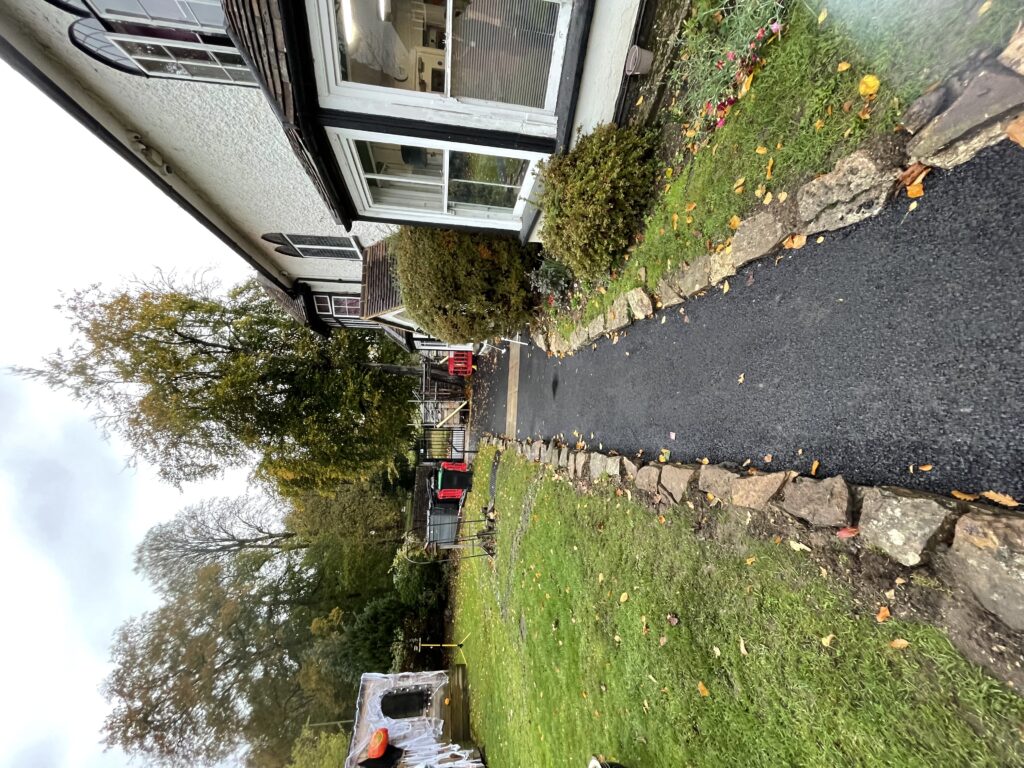
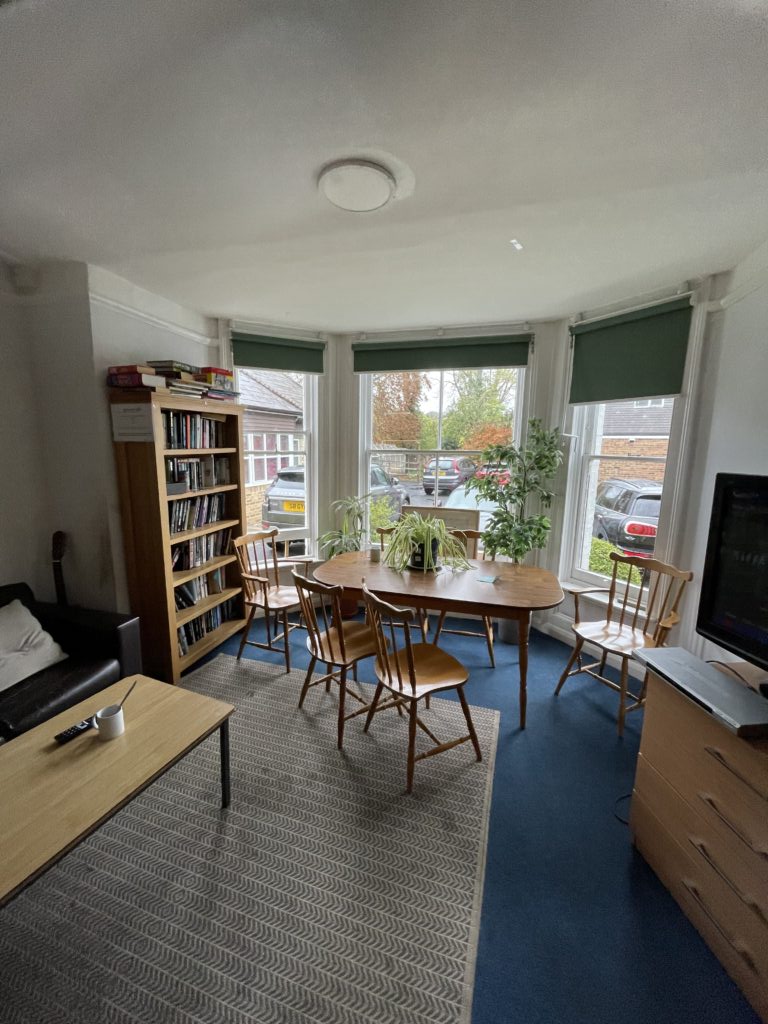
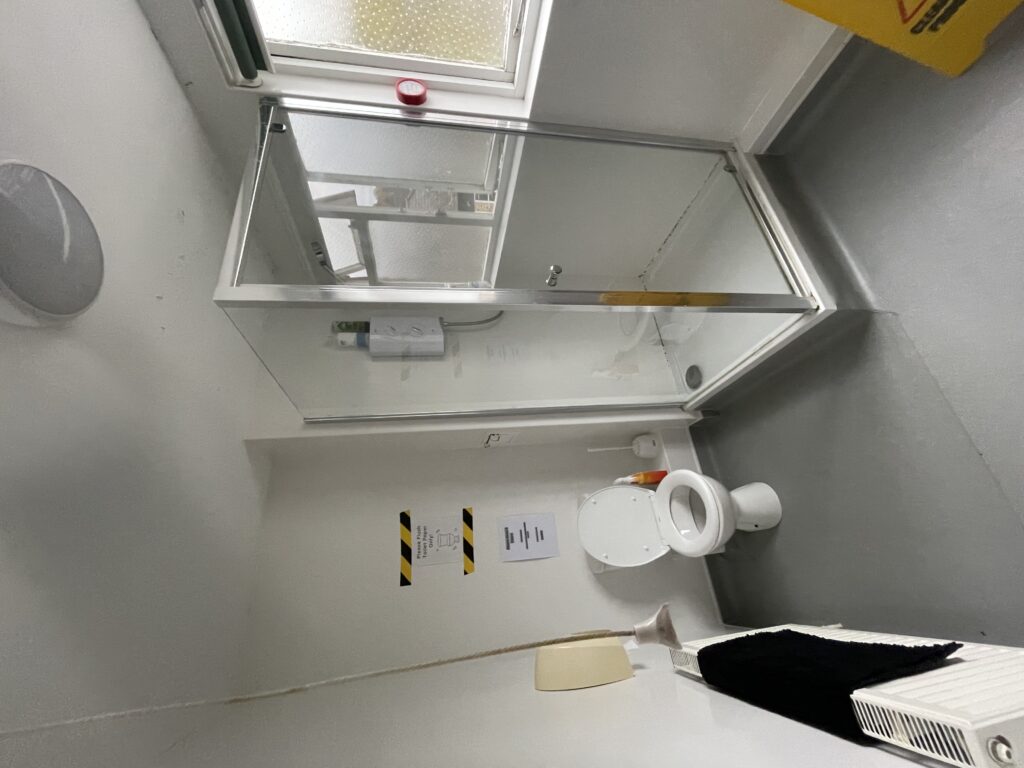
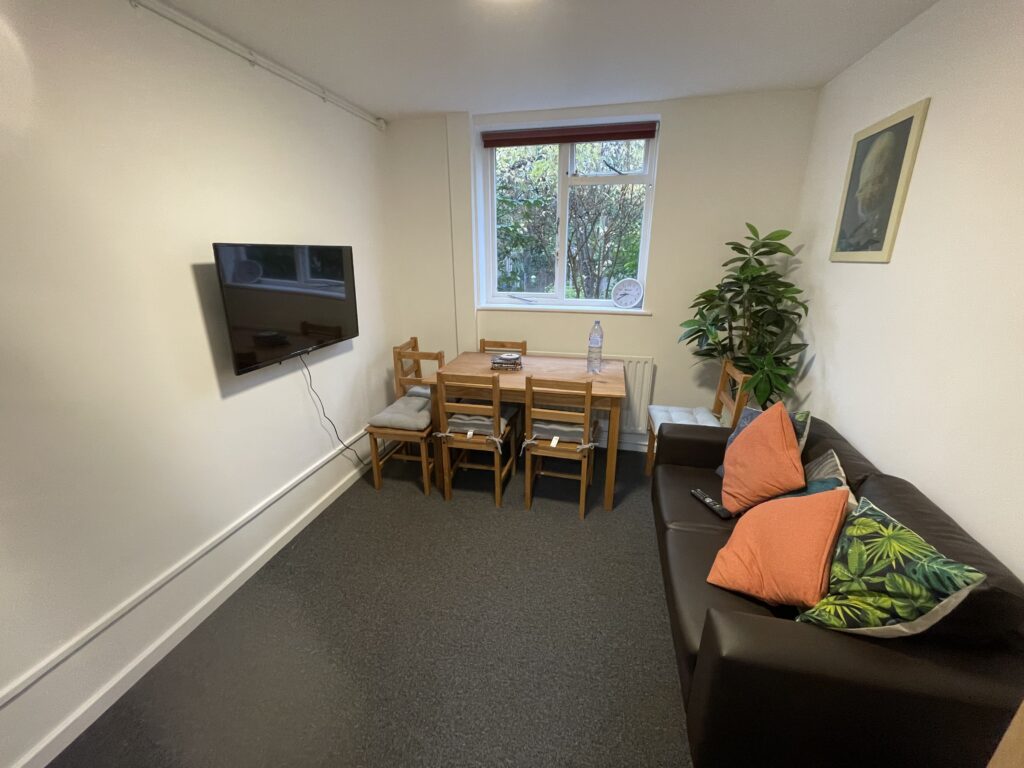
- SCP was clean, decent and well maintained throughout. It felt homely and welcoming. All residents interviewed were generally positive about the wider AP environment and the standard of cleanliness.
- The kitchens were well equipped and kept relatively clean during fieldwork. Self-catering worked well at SCP with regular cooking groups and food bank vouchers available for residents who were struggling.
- Residents were complimentary about the standards of the shower and toilet facilities.
- Staff and visitors were provided with personal assistance alarms which were tested before being handed out. CCTV quality was good and we observed CCTV being used by staff to monitor interactions between residents.
Areas for improvement:
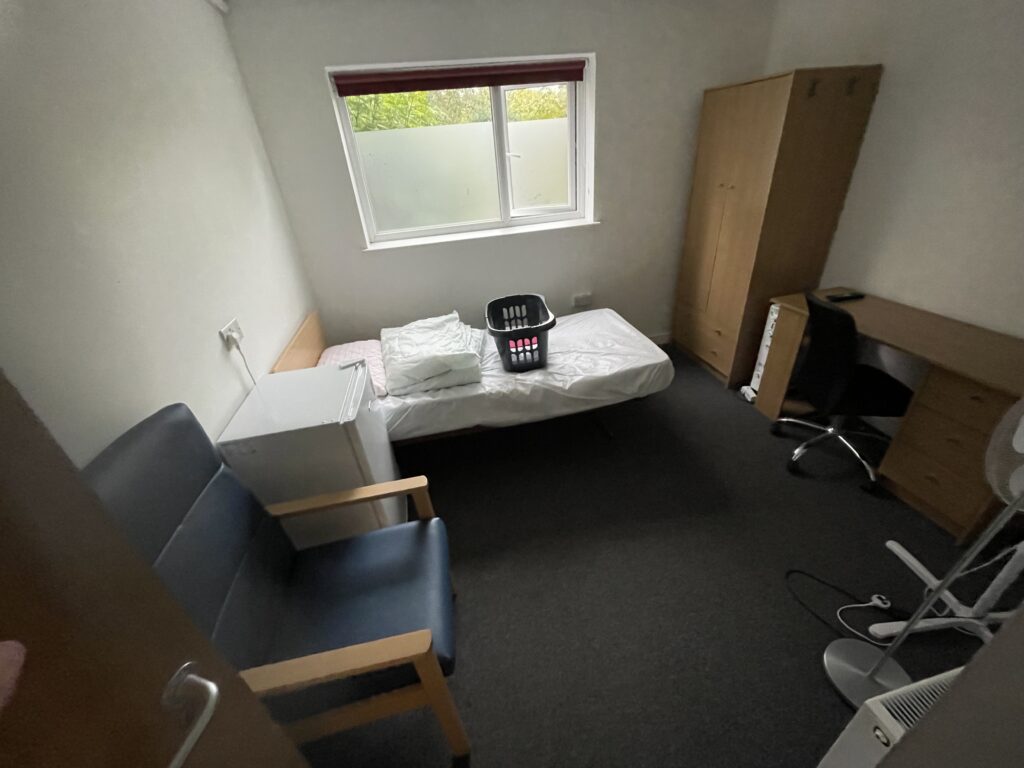
- SCP had a mix of single and double occupancy rooms. We found the practice of room sharing to be problematic for residents, particularly through the lack of personal privacy and the disruption to sleep caused by noise and differing routines. These conditions negatively impacted residents’ wellbeing and placed a significant burden on management to coordinate the arrangements.
- SCP was compliant with national policy for identifying residents who required additional roused responses during the night due to potential overdose risks. These additional checks remained in place for at least the first three weeks following arrival and resulted in residents who required such checks only having a maximum of three hours uninterrupted sleep. Individuals in shared rooms potentially endured these interruptions for more than three weeks when sharing a room with somebody subject to the checks. These roused response checks were causing significant issues for both residents and staff and there was no discretion on how the policy was implemented. Residents were tired and staff felt that the roused response checks were directly affecting their wellbeing and mental health.
- Residents complained repeatedly about the quality of bedding, which was adapted to ensure some resistance to fire. Although staff and managers had tried to respond to these concerns, national safety requirements mandated these arrangements.
Public protection (Back to top)
| The Approved Premises effectively protects the public | Rating |
| Outstanding |
Strengths:
- SCP was represented at all MAPPA meetings. The two managers shared responsibilities appropriately, ensuring representation at all meetings, and the area manager attended meetings for residents managed at MAPPA level three. PSOs attended in cases for which they were key workers.
- Enforcement decisions were robust and recording was strong in all relevant cases inspected. We were provided with other examples of enforcement decision making and recording from the three months leading up to our inspection at SCP which further evidenced good practice in this area. Compliance or potential behaviours of concern were discussed in handover meetings which were all accurately recorded.
- Although we did not see any examples of child or adult safeguarding in our case sample, the managers provided examples of the team at SCP taking swift and appropriate action in relation to both child and adult safeguarding. Staff had also attended the required training.
- The inspection case sample highlighted some strong practice in relation to information sharing and joint working with probation practitioners. Staff were proactive in communicating with staff in PDUs and we saw regular use of three-way meetings both to motivate residents and jointly manage the risks they posed.
- The process for recording and monitoring compliance with licence conditions in the main office, including sign-ins and curfews, was easily accessible and robust. Each staff member had a copy and referred to it throughout their shifts, responding appropriately in instances of non-compliance.
- SCP had a good relationship with the police, particularly the HHPU team who sometimes attended the AP. Managers provided them with a weekly overview of the resident population at SCP so that their systems could be updated and to support wider risk management within the community.
- Regular drug testing was evident in the cases reviewed. We were also provided with an extensive range of case examples from the three months leading up to our inspection where drug and alcohol testing had been carried out and appropriate decisions made in instances of positive tests and escalating risk.
Areas for improvement:
- SCP experienced frustrations with the Central Referral Unit processes with high numbers of short notice arrivals and residents from out of area and insufficient time for proper planning. The staffing issue at SCP compounded these problems further. Although these concerns were escalated and taken forward by senior managers, the problems persisted.
Rehabilitation (Back to top)
| The Approved Premises delivers activity to reduce reoffending | Rating |
| Requires improvement |
Strengths:
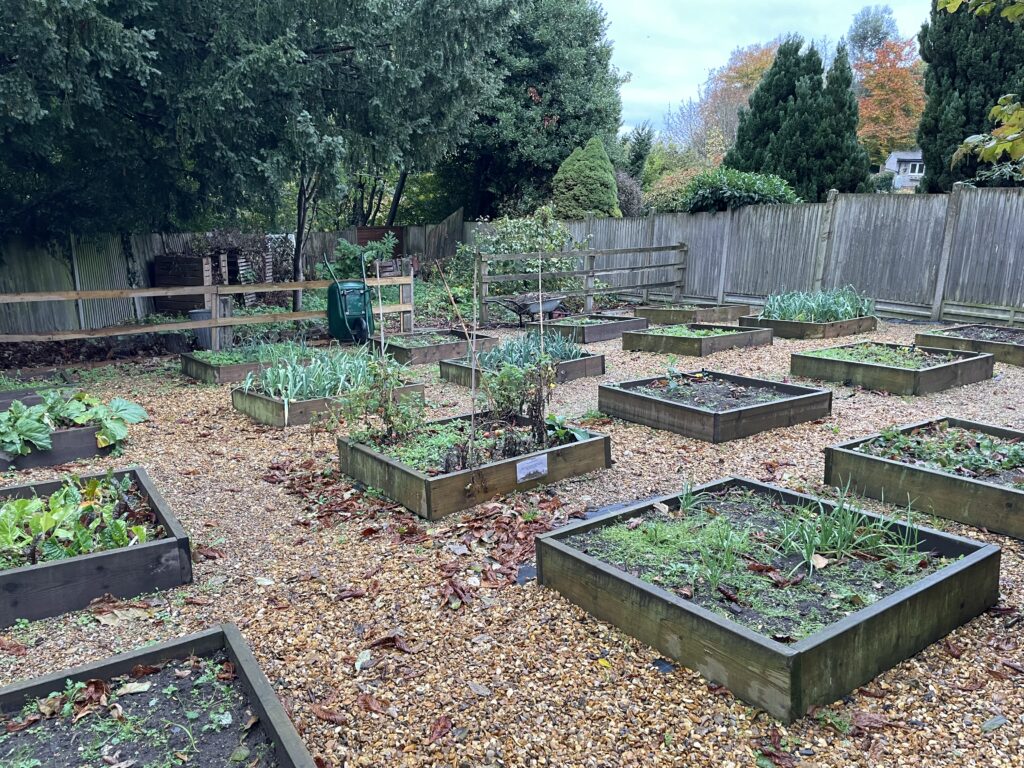
- There was some collaboration with other organisations and services to ensure access to interventions and promote rehabilitation, as already outlined. There were some regular activities running for residents at SCP, including a weekly residents meeting, the weekly wellbeing group and the availability of housing advice and support via HPT. We were also informed about intermittent cooking, gardening and stargazing activities which were led by SCP staff.
- Collaboration with PDU staff was a key strength at SCP with an array of evidence contained within case records of joint working between AP staff and probation practitioners. Work was appropriately aligned with the sentence plan and did not duplicate or contradict work that had been identified by probation practitioners.
- Records showed that staff delivered a thorough and detailed induction. We also observed delivery of the first induction meeting which was meaningful and facilitated to a good standard. SCP performed consistently above the national average for timely delivery of the two-stage induction.
- Residence plans were completed prior to residents’ arrival in seven of the eight inspected cases and were of sufficient quality.
- Inspectors deemed relationships between staff and residents to have been positive in all the cases reviewed – an important foundation for rehabilitative work. Residents interviewed generally felt respected and supported by staff at SCP. The values and attitudes of the staff members present at SCP during our inspection were conducive to supporting residents in their rehabilitation and interactions were positive.
- Key work recording was strong in the inspection case sample, happened frequently and included signposting for residents to relevant services. Although there was a lack of structured and planned activities at SCP, residents had been engaged in some work to meet their needs and build on their strengths in six of the eight inspected cases.
- During fieldwork we observed residents cooking for staff and fellow residents which was a key strength for them. The self-catering arrangement at SCP was a positive feature of the regime and was working well at this AP.
- We were made aware of examples of staff supporting residents to move on from the AP, although there were limitations and obtaining accommodation in the local area was difficult, very expensive and often out of reach for many residents. Nevertheless, supporting residents with applications to other supported housing options, including the tier three Community Accommodation Service was standard practice. Having the accommodation officer from the local PDU on-site every month was a valuable and well-used resource. The managers extended the length of placements at times to avoid residents becoming homeless.
Areas for improvement:
- Managers were open and transparent about wanting to do a lot more to support the rehabilitation of residents and accepted from the outset of the inspection that this was an area for improvement. It had been a strategic decision, in light of the ongoing staffing problems, to prioritise public protection and the safety and wellbeing of residents. A number of residents interviewed wanted more to do and some specifically requested support with budgeting and help to increase their knowledge of the local area and the services available.
- Only one of the seven residents in the inspected case sample had received contact from an SCP staff member prior to their arrival in the form of written information sent about the AP. None of the residents interviewed during fieldwork had received contact from the AP before their arrival. Pre-arrival contact with prospective residents is a vital tool to promote compliance and support their transition from prison into the community.
- Staff highlighted a lack of access to mental health services for residents, which was an enduring issue for many.
- A clear move-on plan was only visible in three of the eight cases inspected.
- Given the staffing issues at SCP, managers should focus on maximising the involvement of other agencies in the delivery of a structured programme of rehabilitative activities within the AP.
Press release (Back to top)
“Positive and committed staff” found at St Catherine’s Priory Approved Premises, rated ‘Good’
Further information (Back to top)
This inspection was led by HM Inspector Stuart Tasker, supported by a team of inspectors and colleagues from across the Inspectorate. We would like to thank all those who helped plan and took part in the inspection; without their help and cooperation, the inspection would not have been possible.
Images (Back to top)