
Annual Report 2026
Foreword (Back to top)

This has been a period of significant activity for HM Inspectorate of Probation, set against a backdrop of a Probation Service under considerable strain. Since our last probation annual report our inspections have chronicled an organisation grappling with serious systemic challenges, an increasingly large and complex caseload, and continuous change. In the latest year for which figures are available we saw increasing numbers being released from prison, an increasing probation caseload, and an increasing proportion of the caseload being managed in the community. Throughout our work, we have done our best to recognise these issues, while highlighting the commitment and best practice we have seen, alongside providing the independent scrutiny and evidence-based challenge that the public and the service require to drive improved outcomes.
January 2025 began with us engaging actively with major reviews shaping the future of the criminal justice system. I have valued the opportunity to continue to engage with ministers, policy teams, and other stakeholders across government to share our inspection findings and research, and to support the drive for positive change. In January 2025, we submitted our response to the Ministry of Justice’s Independent Sentencing Review, making the case for a fundamental reset in the balance between custody and community sentences. Our response was unambiguous: the Probation Service has too few staff, with too little experience, managing too many cases. We called for radical change to give the service the best possible chance of making a meaningful impact within its existing resources, including a rethink of recall practice, which now accounts for over 12,500 prisoners in custody at an estimated cost to the taxpayer of more than £600 million per year. We followed this in February by submitting our response to Sir Brian Leveson’s Independent Review of the Criminal Courts, where we advocated for action to address the deeply corrosive impact of crown court backlogs on victims, defendants, and the Probation Service’s ability to intervene effectively in the causes of offending.
In April 2025 we published our National Inspection of Probation Services, a report designed to give a comprehensive picture of the national arrangements that enable or hinder effective probation delivery. That inspection’s findings were sobering. We identified major shortfalls in national arrangements to support service delivery and keep people safe, with an overall rating of ‘Requires improvement’. Public protection emerged as a persistent and serious area of weakness, a finding that was to define much of our work for the rest of the year and across our strategic plans moving forward.
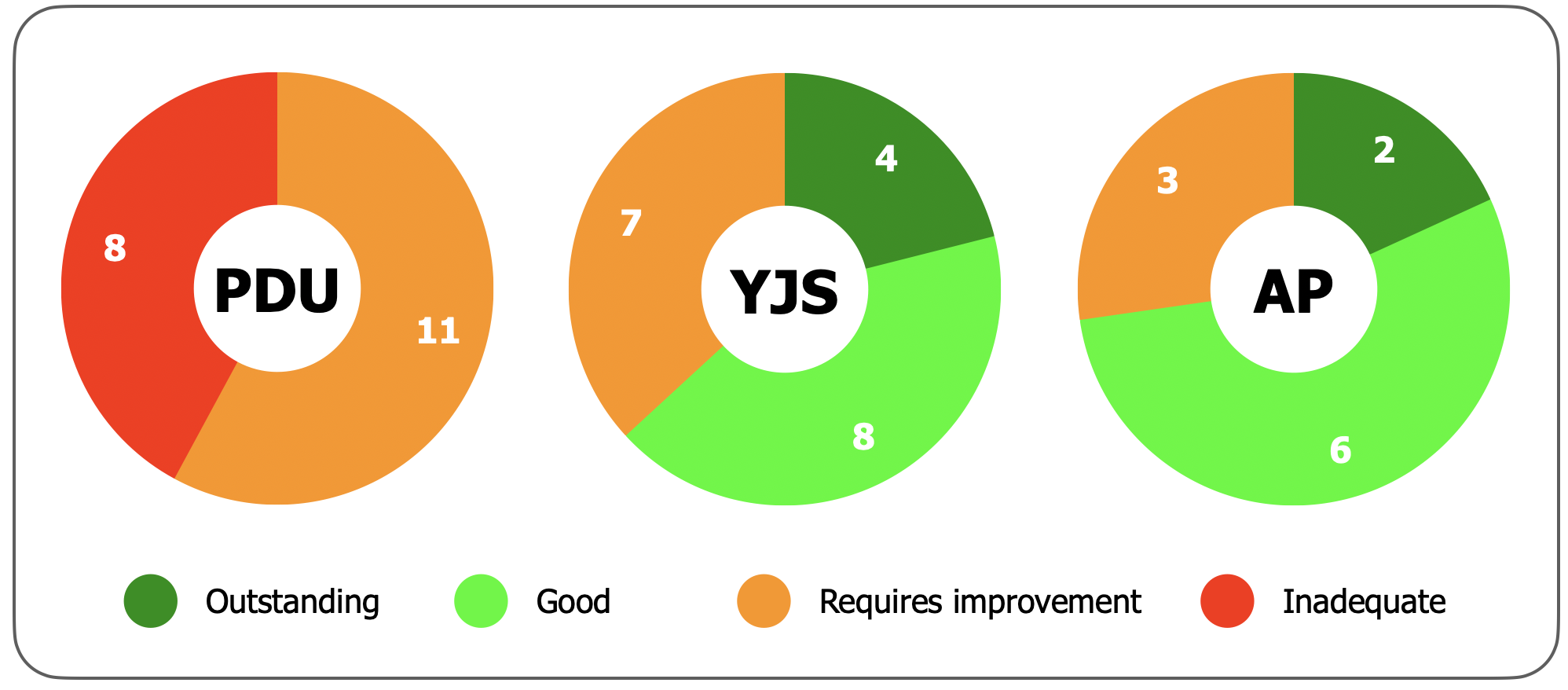
Our inspection programme across regions and probation delivery units (PDUs) told a similarly concerning story. Inspections in the North East, the East Midlands, and Wales all identified public protection as a consistent area of weakness. Every PDU inspected was rated either ‘Inadequate’ or ‘Requires improvement’. With two-thirds of cases judged insufficient against our public protection standards – and in some areas fewer than one in five cases meeting our threshold – it became clear that a different approach was needed.
In October 2025, I took the difficult, but necessary, decision to pause our core adult inspection programme and launch a six-month dynamic inspection focused solely on public protection. Beginning with fieldwork in the South Central region, the programme is examining all 12 regions, with each inspection accompanied by follow-up activity with strategic leaders and managers. The early findings have revealed an absence of accountability and a fundamental lack of grip on what should be the foundation stone of probation delivery. But they have also potentially demonstrated a pathway to improvement. Reports from the first half of the programme were published between January and end-March 2026, with findings highlighting staffing gaps and a lack of experience, significant issues with information sharing, and the burden placed on overstretched staff by large-scale change programmes. However, we have also seen that where leaders have increased their focus on public protection work, improved results have followed. The programme is due to conclude in July 2026, and we look forward to sharing overarching findings from across the programme alongside examples of effective practice in due course.
In a different area of probation work, September 2025 saw the launch of our approved premises (AP) inspection programme – another important step in extending independent scrutiny across probation work. Approved premises play a vital but largely invisible role in public protection, housing individuals assessed as posing a serious risk of harm as they transition back into the community, but until now, they have faced no independent inspection. Our first report, on Southview Approved Premises, was a positive one, where we saw strong leadership, stable staffing, and residents who were well supported within a safe environment. We rated the service ‘Outstanding’ – a timely reminder that even amid systemic challenges, excellent practice exists and must be recognised and shared. There is however more to do to ensure there are adequate staffing arrangements to support strong and consistent delivery.
Our work with the youth justice system has seen further innovation, with the launch of a new inspection programme following extensive consultation and piloting. This new approach places children and victims at its heart, allowing us to remain agile and proportionate with an emphasis on achieving positive change and keeping children and communities safe. Under this programme, we published 19 reports between spring 2025 and end-March 2026 under the new standards to positive feedback from the sector and inspected services. We have seen strong, stable teams, with manageable caseloads, who have a strong understanding of the children with whom they work, and are able to give them the support they need. We have also seen good local leadership and partnerships and, while there is still room for improvement, there are many lessons that can be learned by the wider sector.
Alongside our inspection work, we continued to develop our research and participation functions. We published two thematic inspections covering safeguarding adults, and a joint inspection with HM Inspectorate of Constabulary and Fire & Rescue Services on out-of-court disposals (now, out-of-court resolutions). Two effective practice guides were also published to accompany these thematic inspections.
We continued our work to find new ways to listen to the voices of people who have experienced the justice system, with the launch of our two-year participation strategy in May 2025, our work with our children’s advisory panels, and the establishment of a new lived experience advisory group for people on probation. We also continue the development of our youth inspection programme through a new, longer-term stakeholder group that supports our ongoing commitment to engage with and listen to the youth justice sector.
Our organisation has seen exciting internal change too. In October 2025 we welcomed our new chief operating officer, Faith Geary, who is driving a programme of strategic review and improvement aimed at maximising service delivery and accountability for our stakeholders across the sector and beyond, including how we can increase our use of digital technology and inspect services increasingly looking to digitalise services
As we look ahead, the implementation of the Sentencing Act and the ongoing introduction of major policy changes mean the probation service faces a period of continued pressure and transformation. The £700 million investment in probation announced alongside the act is welcome but, as I have said publicly, it must be the starting point. We need a sustained and serious commitment to rebuild the service – so that it can help keep the public safe, improve outcomes for people on probation and reduce reoffending.
The report that follows sets out more of our work over the past year, and the evidence that continues to underpin our call for urgent, focused action to protect the public, support victims, and give the Probation Service the foundations it needs to succeed.
Martin Jones CBE
HM Chief Inspector of Probation
Our annual report in numbers:
- 19 probation delivery unit (PDU) inspection reports across three regions of the Probation Service
- Three regional effective practice spotlights
- 19 youth justice inspection reports
- Two stand-alone thematic inspections and two accompanying effective practice guides
- One thematic inspection review
- 11 approved premises reports
- Six dynamic inspections of public protection
- Three Research & Analysis Bulletins
- 13 Academic Insights.
Scoring for individual programme reports during the period of this annual report.
Our national inspection and response from His Majesty’s Prison and Probation Service (Back to top)
Our national inspection of probation services was published in April 2025. This inspection examined the sufficiency of national arrangements across His Majesty’s Prison and Probation Service (HMPPS) to support, enable, and drive the effective delivery of probation services within regions and probation delivery units.
National arrangements have a crucial role in enabling successful outcomes in frontline probation work and, while there were some strengths in the work inspected, we saw significant areas for improvement. The criminal justice system faces ongoing challenges and, unfortunately, our findings did not demonstrate that the service was adequately prepared to respond effectively.
We rated the overall sufficiency of these arrangements as ‘Requires improvement’. We also rated:
- leadership: ‘Requires improvement’
- staffing: ‘Requires improvement’
- services: ‘Inadequate’
- IT and infrastructure: ‘Requires improvement’.
Leadership needed to be stronger, both in providing consistent messaging and delivering action, in the key objectives of probation supervision: to protect the public and reduce reoffending. These two core objectives should not be delivered as isolated entities but embedded across all delivery outcomes, and we did not see this cohesion at a national level.
The inspection did highlight strengths in information and communication technology (ICT) and digital services, where we saw some impressive work focused on improving delivery on the frontline.
However, we found worrying results in services, where several major shortfalls directly affected delivery. The gap between national arrangements and frontline operational need was a cause for concern – reflecting both the low implementation and delivery scores we too often see in core inspection activity, and the casework underpinning this inspection.
We found a need for significant change to ensure sufficient capacity within the Probation Service to meet operational demand and improve the quality of services, including difficult decisions about what is done, and with whom, to ensure those most at risk of further offending and causing serious harm are managed sufficiently.
At a national level, there were some encouraging building blocks in place to deliver against HMPPS ambitions, but we did not see evidence that policy and strategy were being converted into meaningful operational delivery. National arrangements must do all they can to support, empower, and enable crucial frontline work, and our recommendations spelled out the steps that need to be taken to deliver the best possible outcomes for the public.
Response from HMPPS
In February 2026, we received the HMPPS response to our national inspection.
It welcomed our independent scrutiny of the service and committed to responding positively to its findings, with progress to be demonstrated in future inspections.
The response covered four main areas. On leadership, an HMPPS review of its target operating model in light of the Sentencing Act, spending review, and Leveson review, and engagement with the Inspectorate’s ongoing six-month dynamic inspection of public protection. On staffing, HMPPS exceeded its 2024/25 trainee recruitment target and has committed to 1,300 recruits in 2025/26, while the ‘Our Future Probation Service’ (OFPS) programme aims to cut practitioner workload by 25 per cent by 2027. On services, progress was highlighted across accommodation, employment, accredited programmes, and multi-agency partnerships. On infrastructure, the response highlighted investment under way in digital tools, including AI transcription, new assessment systems, and integrated case management to reduce administrative burden.
The period since our national inspection has been one of considerable change for the service, so we are pleased to see areas where progress has been made, in particular across probation strategy and digital working, which were key report recommendations.
However, the service remains under significant strain and there is still a critical need for urgent attention, at the most senior level, to ensure it has the staff, resources, and focus it needs to protect the public and reduce reoffending.
The Inspectorate will continue our independent scrutiny, alongside our work with ministers and HMPPS, as further changes from the Sentencing Act are implemented to ensure progress is made across all our report’s recommendations.implemented to ensure progress is made across all our report’s recommendations.
Probation services inspections (Back to top)
Since our last probation annual report in March 2025, we have undertaken the following regional inspections:
- East Midlands region (East and West Lincolnshire PDU, Leicester, Leicestershire and Rutland PDU, Nottingham City PDU, Nottinghamshire PDU, Derbyshire PDU, and Derby City PDU)
- North East region (County Durham and Darlington PDU, Redcar, Cleveland and Middlesbrough PDU, Stockton and Hartlepool PDU, North Tyneside and Northumberland PDU, Sunderland PDU, Gateshead and South Tyneside PDU, and Newcastle upon Tyne PDU)
- Wales region (Gwent PDU, Cardiff and the Vale PDU, North Wales PDU, Dyfed Powys PDU, Cwm Taf Morgannwg PDU, and Swansea Neath Port Talbot PDU).
While there were, and indeed always are, some examples of strong and effective practice within each region, we did not see this in enough cases and there were significant weaknesses in core areas such as public protection, court work, resettlement, and the delivery of desistance-focused interventions. Across all three regions, leadership demonstrated clear strategic intent and there were some solid foundations in place; despite this, all regions continued to struggle to translate this into consistently improved frontline practice and the quality of delivery remained insufficient.
Public protection was the weakest-rated area across all three regions. The East Midlands demonstrated consistently poor risk assessments, ineffective planning, and weak multi-agency public protection arrangements (MAPPA) coordination, compounded by ineffective management oversight. The North East demonstrated poor information use, inconsistent multi-agency working, and gaps in identifying victims. Wales performed similarly, with weak analysis and limited professional curiosity despite established partnerships. Overall, all regions struggled to manage risk and protect the public effectively and to a sufficient standard.
All regions showed a pattern where they were stronger in assessment and planning than delivery in supporting desistance. In the East Midlands, delivery was hindered by delays, poor coordination, and limited access to key services, although assessments were relatively strong. The North East generally identified needs and strengths well but failed to deliver targeted, sequenced interventions, especially for those covered by Probation Reset.1
Wales also demonstrated good initial assessments supported by structured initiatives; however, implementation was weak, with poor coordination, limited effectiveness, and insufficient involvement of people on probation.
Court work was inconsistent across all regions. A large proportion of reports within the East Midlands region failed to meet standards, constrained by staffing shortages and limited access to information, leading to missed opportunities to influence sentencing. The North East delivered mixed performance, with good engagement and appropriate proposals, but quality was undermined by poor partner information and limited professional curiosity. In Wales, court work was insufficiently analytical, lacking personalised reports and demonstrating major gaps in safeguarding information.
Resettlement practice varied considerably but was inconsistent in each region. The East Midlands demonstrated weak pre-release planning, poor prison-to-community handovers, and only a minority of cases benefited from effective resettlement support, despite some developing improvements. The North East showed some strong practice but often lacked effective pre-release planning, consistent contact, and information sharing. Wales demonstrated strategic strengths and good identification of needs, but inconsistent delivery and weak risk management across cases.
Unpaid work showed operational strengths but consistent weaknesses in assessment and risk management across regions. The North East offered strong engagement, varied placements, and skill development, but weak planning and communication led to poor management of risks. Wales showed good compliance, enforcement, and rehabilitative opportunities, yet similarly weak assessment and limited communication reduced effectiveness. The East Midlands, while also offering a strong rehabilitative structure and organised delivery, struggled to demonstrate personalised planning and had incomplete risk analysis; this highlighted a common gap between delivery strengths and risk management across all regions.
Victim work was a consistent strength across all three regions, though with some common limitations. The East Midlands offered strong support and communication for victims, but late or incomplete referrals and inconsistent information sharing occasionally reduced effectiveness. The North East provided timely, meaningful engagement and strong collaboration, though police information was sometimes incomplete and involvement in MAPPA was inconsistent. Wales delivered a well-coordinated and victim-focused service through the Wales Victim Unit, with high engagement and good communication, though integration with wider processes could have improved. All regions demonstrated strong commitment to victim engagement despite information-sharing challenges.
Overall, the regional inspections identified systemic issues, particularly in public protection, an inconsistency of practice, and varying quality of information exchange and coordination across agencies. Given the consistent deficiencies found in public protection work across the service, in October 2025 we paused our probation inspection programme to undertake a new, dynamic inspection of public protection across all 12 probation regions.
Dynamic Inspection of Public Protection (DIPP) (Back to top)
Up to end-March 2026, we had inspected and published DIPP reports for six of the 12 probation regions: Kent, Surrey and Sussex, South West, South Central, Greater Manchester, West Midlands, and East of England.
Key elements of our dynamic inspections of public protection included:
- inspecting public protection in case work, and interviewing probation practitioners against a set of inspection questions focussed on public protection
- introducing new public protection organisational inspection questions and case assessment rules and guidance
- two weeks of fieldwork in all probation regions, and a case sample which included a minimum of five cases from each PDU in the region
- publishing a report, including qualitative findings and inspection case data in each region but not providing an overall rating, in favour of a focus on exploring the ‘why’ behind the results we found
- delivering follow-up workshops to senior leaders and probation managers in each region, to assist improvement.
Within these initial inspections, consistent positive themes where we saw improvements were stronger leadership, strategic focus, and an improving organisational culture – all evident in most regions. Following our consistent inspection findings, leadership teams were increasingly prioritising public protection, introducing clearer governance structures, and embedding this focus in decision-making forums and quality processes. Where this was embedded fully, it had driven improvements such as strengthened MAPPA, better victim services, enhanced audit and assurance activity, and new initiatives (for example, human factors approaches, complex case panels, technology use, and specialist services).
Partnerships at a strategic level were often described as strong or improving, with better collaboration with police, children’s services, and other agencies in some areas, supported by co-location, service agreements, and joint initiatives. There was also a clear shift toward learning cultures, with investment in reflective practice, Serious Further Offence (SFO) learning, and staff engagement, alongside some gains in resettlement work, planning, and victim involvement. These strengths were generally the result of deliberate leadership focus, structured governance, targeted investment, and clearer processes, which helped set direction, improve consistency at a systemic level, and support incremental improvements in practice.
Positively, every region which we had previously inspected as part of our last core programme (Kent, Surrey, and Sussex, and East of England), and then reinspected as part of the DIPP, showed an improvement in their scores for keeping people safe; however, this was still not enough to demonstrate a sufficient level of delivery.
A dominant and consistent theme emerging from the DIPPs was that frontline delivery and public protection outcomes remained insufficient and inconsistent, despite strategic strengths. Across regions, casework quality was frequently insufficient, particularly in risk assessment, analysis, implementation, and review, with insufficient professional curiosity and poor use of available information.
These gaps in practice were closely linked to workforce instability and capability gaps, including high vacancy rates, inexperienced staff, high workloads, and inadequate or overly theoretical training, which left practitioners underprepared to manage complex risk. In addition, poor and inconsistent multi-agency information sharing, often due to system barriers, lack of national direction, and variable partner engagement, undermined effective risk management. Other recurring issues included insufficient management oversight, underuse or ineffectiveness of interventions, delays in services, and inconsistent operational processes.
These problems were compounded by systemic pressures, such as prison overcrowding, frequent policy changes to address this, complex and process-heavy systems, and resource constraints, which drove reactive, compliance-focused practice rather than professional judgement.
Our initial findings demonstrated a clear pattern: strong intent and improving structures were undermined by staffing shortages, capability issues, and systemic barriers, meaning that improvements were not yet embedded in consistent, high-quality frontline practice.
Youth justice service inspections (Back to top)
As we reached the end of our previous youth justice inspection programme in 2024 and early 2025, we continued to see strong results across the sector. In general, stable workforces, manageable workloads, and high-quality staff supervision were contributing to a youth justice system that helped to have a positive impact on the lives of children under the supervision of youth justice services (YJS).
In our previous youth justice programme, we had inspected 156 services across England and Wales and, encouragingly, only awarded ‘Inadequate’ ratings four times. Two of these ‘Inadequate’ ratings were in the spring of 2025, towards the close of this programme. Our last youth justice annual report carried the warning that cuts to funding and partnership services could have a direct impact on the service YJS were able to provide, and these two ‘Inadequate’ ratings were concerning ahead of the start of a new inspection programme.
Our new youth inspection programme was launched in March 2025 following roadshows, consultation, piloting, and collaboration with colleagues across the youth justice sector. The new inspection framework underwent significant changes and now put the work delivered with children and victims at the forefront of our inspections. The new inspection programme included updated and refreshed standards throughout and was based on up-to-date research and evidence, combining all statutory court work, out-of-court resolutions, resettlement, and bail and remand into a single, domain two standard. This new framework also introduced a new victims’ standard to support positive outcomes and safety for victims.
We now undertake two separate types of inspection: a one-week inspection of youth justice work with children and victims (IYJWCV), where we inspect and rate the service against domain two and the victims’ standard; and a two-week inspection of youth justice services (IYJS). In the two-week IYJS we inspect and rate the service across all standards, including domain one, domain two, and the victims’ standard.
Between the launch of the new inspection framework in March 2025 and end-March 2026, we published 19 reports: 18 were IYJWCVs and one was a two-week IYJS. Seven YJS were rated overall as ‘Requires improvement’, eight were ‘Good’, and four were ‘Outstanding’.
Overall, we found strong performance in YJS engaging children and delivering relationship-based practice. Work to achieve positive change tended to be consistently strong, whereas work to keep children and communities safe was the area that YJS most needed to develop, across assessing, planning, and delivery.
Where the YJS was delivering consistently high-quality work with children it was individualised, trauma-informed, and child-centred, with a clear focus upon victims and safety, for the child and the community. We found high-quality partnership working, a strong management oversight and quality assurance process, committed and effective leadership, integrated services such as health, education, police, probation, and children’s social care, and a culture dedicated to learning, development, and reflection. However, there remained concerning gaps in children accessing their educational entitlements, and we found inconsistencies in information sharing and effective partnership working. This must be a continued are of focus given the strong evidence that children not in education are at far greater risk of offending.
Where assessing activity was strong, we saw child-centred and trauma-informed approaches working well to enable practitioners to understand the children they were working with and undertake detailed analysis to inform assessing. Practitioners were effective in identifying and analysing what was required to achieve positive change, whilst also assessing how to keep children and communities safe. We saw positive examples of effective relationship-building with children and their parents or carers, which informed the assessing of activity, and a growing focus upon consideration of children’s speech, language, communication, and neurodiverse needs, health, and mental health within assessing activity. In the highly rated services, we saw examples of multi-agency case formulations informing assessing activity and effective partnership working to pull together, share, and analyse information.
However, in areas where improvement was required, we found inconsistency in practice, particularly in the analysis of information to inform assessing activity to keep children and the community safe. Factors commonly found included limited analysis and over-reliance on description, where assessing activity failed to identify or analyse underlying causes and impact upon children, such as trauma, their family context, education, and concerns about exploitation. Analysis of children’s lived experiences and vulnerabilities also needed to be more consistent, such as analysing children’s identity and cultural factors. Identification and analysis of the factors required for safety were variable, particularly in understanding children’s family environments and risks outside the home. Whilst we found instances where behaviours were described, consistent analysis of the drivers, triggers, likelihood or potential for future risks or concerns needed further development. Factors such as weapon carrying, violence, exploitation, domestic abuse, substance misuse, attitudes, and harmful sexual behaviours were not consistently explored, identified or analysed, or where they had been recognised they were underestimated. In some YJS, assessing was not holistic and children’s intersectional needs were not fully considered or fully analysed.
Where risks were identified, they were not consistently used to inform effective analysis of safety for the child and others, and in some examples known information was not used in assessing activity. We also saw instances where assessing failed to sufficiently consider the dual perspectives of risks to and from the child.
In areas that scored strongly in planning, we found child-focused and co-produced planning activity, with multi-agency contributions visible and coordinated. Common areas for improvement included the need to sequence planning and ensure it was specific, as well as responsive to change.
Delivery tended to be the strongest standard for domain two, scoring consistently across achieving positive change and keeping children and the community safe. Practitioners focused on developing effective relationships with children and demonstrated persistence, tenacity, and flexibility in engaging with children and their parents or carers. We saw creative, innovative, child-focused interventions that supported children to move forward positively in their lives, and effective multi-agency working to reduce the risks to others or children themselves. However, some YJS needed greater prioritisation in aligning delivery to planning, to be responsive and proactive to changes in children’s circumstances and ensure a clear focus upon what was needed to keep children and others safe.
We saw improved visibility of victim work following the introduction of a victim standard. Increasingly, victim work was now discussed, reviewed, and driven by YJS management boards and we saw increased organisational oversight. Operational and individual work also now had an increased focus on the quality of work with victims to keep them safe, and we found improvements in management oversight and better understanding of the cohorts of victims and their needs. However, those areas requiring improvement had inconsistent recording of victim work, a lack of understanding of victims’ needs and wishes, and an absence of hearing victims’ voices and using them to inform victim services.
In some areas we saw exceptional delivery and organisational oversight of victim work. Many areas had adopted a case management approach to working with victims, driving up the quality of recording, focusing upon victim safety and wellbeing, and ensuring access to a range of appropriate services that met victims’ needs. Encouragingly, many YJS now offered child victims the same opportunities, access to intervention and support as those offered to children who had offended.
Recommendations from the programme prioritised strengthening information sharing, improving access to educational entitlement for children, improving sharing and recording of victims’ protected characteristics, and better hearing of victims’ voices, as well as enhancing strategic development and oversight of victim services. We made several recommendations for improving the quality of analysis in assessing activity, particularly in keeping children and the community safe, ensuring assessing and intervention were dynamic, and prioritising management oversight that was of a consistently high standard.
We have also proactively reviewed the new programme to ensure we have captured all learning and feedback and have subsequently made a number of changes to paperwork and guidance. Over the coming year, we are implementing more two-week inspections of youth justice services and considering where our first reactive inspection (moving from an IYJWCV to an IYJS) will take place. We have also commenced our stakeholder working group with representation from YJS across all regions and Wales.
Our impact
We have already seen the positive impact of the introduction of the victim standard, with progress made locally and nationally on improving the quality of information that police share with YJS about victims. This has facilitated effective and individualised work with victims and ensured provision of the right services to meet victims’ needs. Working jointly with the Youth Justice Board, Ministry of Justice youth justice policy unit, and other inspectorates, our findings have supported work with the National Police Chiefs’ Council (NPCC) to improve the quality of information about victims given to the YJS. We have also received feedback on progress made with local police forces which has prioritised improved recording of victims’ details and information sharing.
YJS feedback has commented on the positive impact of inspection for them. One YJS described its experience of multi-agency case discussions during inspection as a helpful ‘wake-up call’, and another highlighted that the multi-agency case discussion was a positive opportunity to pull together the partnership and reinforce the importance of effective multi-agency working. Some YJS reported they had implemented ongoing multi-agency case discussions as part of their internal auditing and quality assurance, as well as improving their relationships with partners.
We have also found that, following inspections, YJS have had greater interest from and joined up with other partners, such as community safety partnerships, serious youth violence units, and lead members. One YJS reported that the inspection had had a ‘massively positive impact’ and that it enabled its team to ‘realise their own growth’ and reflect on the quality of the work they were delivering. A number of YJS said that following inspection, strategic leaders had undertaken reviews to increase resourcing, review management stretch, and increase capability for management oversight. YJS also indicated that inspection had helped them turn the spotlight on specific areas, such as out-of-court processes, assisting them to prioritise those areas most requiring attention and action. Other YJS reported that their inspection had given them much-needed validation, particularly with partners and local authorities.
Our inspectors within the youth team have strong regional links with the YJB and we continue to work closely with the YJB, MOJ youth policy unit, and ministers to ensure they are sighted on the findings of our inspections and to drive learning forward.
Approved premises (AP) (Back to top)
In September 2025, the Inspectorate published its first approved premises report. This new inspection programme was introduced to bring oversight to an area of the criminal justice system that is not often visible, but that plays a vital role in supporting higher risk prison leavers and people on probation to rehabilitate and resettle safely, while protecting the public.
Before the launch of this programme, APs were not subject to any public accountability through inspection, and given the Inspectorate’s ongoing concerns about public protection, we have been pleased to introduce this oversight – both to drive improvement and to recognise best practice across the network. From the launch of our AP inspection programme until end-March 2026, we published 11 reports. The findings from these inspections have been mixed, with examples of innovative, collaborative working in some AP and concerning deficits in others.
Inspection findings so far paint a picture of AP staff working hard under significant systemic pressures, particularly in staffing and resources. Where APs performed well, as at Southview and Eden House, they tended to reflect strong leadership, a clear and embedded culture, and extensive external partnerships. But our findings were clear that national-level decisions on staffing, the central referrals unit (CRU) placement process, facilities management, and welfare check policy were creating challenges that individual AP could not fully resolve on their own.
Staff shortages have so far been the most pervasive issue across the findings. Almost every AP was either understaffed at the time of inspection, such as Joyce Meggie House in Southwark or, in the case of Ascot House in Stockport, had recently experienced significant shortages. This had knock-on effects across all areas of delivery, reducing rehabilitative provision, increasing pressure on managers, and compromising oversight and quality assurance. As a result, one-third of the published reports have urged HMPPS to complete the review of staffing, resourcing, and recruitment procedures for APs, to promote safe and rehabilitative practice.
Inspectors noted issues with privacy, sleep disruption, and the unsuitability of room sharing for residents with trauma histories or complex needs. The CRU’s role in placement decisions, sometimes overriding local managers’ assessments of room-share suitability, was also flagged as a systemic issue requiring national attention.
Our impact
Taken together, these inspections are already shining an important light on a previously under scrutinised part of the system, helping to identify both what works well and where change is urgently needed. They are prompting constructive dialogue with HMPPS and driving a clearer focus on improving outcomes for residents and enhancing public protection and rehabilitation. We will continue to use our inspection findings to highlight and publicise effective practice, while also being clear and consistent in calling for the national changes required to address wider systemic issues.
Thematic inspections (Back to top)
Two thematic inspections have been published since our last probation annual report.
This joint inspection was published in collaboration with HM Inspectorate of Constabulary and Fire & Rescue Services. The report found a broad consensus on the importance of avoiding the unnecessary criminalisation of children. The overall approach was fragmented, however, and inadequate data and strategic direction were hindering progress.
The police sometimes dealt with significant numbers of children alone without YJS involvement, with inspectors also finding cases where children had been incorrectly told they had to complete interventions or face prosecution, which was inaccurate and potentially coercive.
Access to education and wellbeing interventions often remained unmet at the end of out-of-court resolutions, with support either arriving too late, ending too early or lacking proper exit or onward planning.
- Safeguarding adults at risk of harm supervised by the Probation Service in England: a thematic inspection
- HMPPS response: Safeguarding adults at risk of harm supervised by the Probation Service in England – HMIP thematic inspection – GOV.UK
This thematic inspection called for a renewed focus on embedding safeguarding at the core of probation practice, with findings revealing that the integration of safeguarding, health, and wellbeing into strategic frameworks had been implemented unevenly. Inspectors praised some initiatives, such as the hepatitis C testing on probation premises, but were concerned about the implementation of the death under supervision policy, with practitioners expressing apprehension about the review process.
Access to mental health services was variable, and assessment and planning were inconsistent, with safeguarding risks overlooked or insufficiently addressed.
This spotlight review showed that application of sentences to domestic abuse perpetrators continued to show deficits, with insufficient delivery of interventions and a lack of reviewing activity to make necessary adjustments throughout the sentence. Additional demands placed on the Probation Service since 2023 had not adequately considered the risks of domestic abuse.
Positively, the information-sharing agreement between the National Police Chiefs’ Council and HMPPS was updated in 2024 to close the loophole that allowed police forces to refuse probation enquiries about domestic abuse incidents involving a person on probation. This would be further strengthened by a national service level agreement to ensure that relevant information is always provided.
We have a wealth of learning and evidence-based findings on multi-agency working from our joint targeted area inspections (JTAIs)2, which are collated and disseminated as thematic reports. Our joint report on the multi-agency response to children who are victims of domestic abuse found variations in how well the risk posed by domestic abuse perpetrators was understood and managed by children’s services, police and probation services. In several areas, assessments failed to consider the full impact of domestic abuse on children. Improvements were noted in probation representation at multi-agency safeguarding hubs, which could make a significant difference when perpetrators accessed effective interventions.
Our impact
An action plan was produced in response to each thematic inspection to address the recommendations. Following publication, a Chief Inspector roundtable was convened to hear from sector leaders, provide constructive challenge, and support the embedding of improvements. A progress update was published after 12 months.
These thematic inspections showed a Probation Service operating under sustained pressure. While national and regional leaders had taken purposeful action, long-standing system constraints – including workforce shortages, uneven capability, data gaps, and partner agency dependencies – continued to limit the pace and consistency of improvement.
Two thematic inspections highlighted in our last annual report have also contributed to improved practice across the sector. While there is still work to be done, recommendations were contributing to improved workforce data, clearer role differentiation, and stronger regional oversight. Better workforce segmentation and forecasting had increased visibility of staffing risks and will support more informed resourcing decisions.
Unpaid work demonstrated some of the most tangible progress across the thematic programme, with improvements in delivery, oversight, and consistency. Sustained progress will be closely linked to changes arising from the Sentencing Act 2026 with the anticipated increase in community disposals.
The findings and recommendations from our youth diversion inspection were informing the government’s wider work on youth justice reform, supporting policy development and system improvement.
Each thematic inspection was supported by an effective practice guide, showcasing positive practice and enabling practitioners and leaders to draw on these examples in their own work. We also worked with User Voice to capture the views of children and adults in the criminal justice system. Over 1,000 individuals shared their experiences of unpaid work, with many highlighting the positive impact of learning new skills while contributing to their communities.
Joint inspectorate findings add depth to our own single agency inspections. The JTAI programme was based on a model of supporting improvement in multi-agency working. We worked with government departments and key stakeholders in identifying themes, and the findings were used widely to drive improvement. JTAI thematic reports were regularly referenced in key policy documents and academic research, reflecting the influence across the system.
Upcoming thematic inspections:
In 2026/2027 we will undertake thematic inspections on the following topics:
- electronic monitoring
- probation court work
- youth justice services strategic arrangements.
We will progress these thematic inspections alongside joint work with HM Inspectorate of Prisons on addictions and with HM Inspectorate of Constabulary and Fire & Rescue Services (HMICFRS) on knife crime. The consultation also revealed a strong support for an inspection on recall practice, which we will prioritise for scoping. Finally, we will continue our commitment to the Ofsted-led joint targeted area inspection programme of child protection.
Research and data analysis (Back to top)
Our research output from January 2025 until end-March 2026 included 13 Academic Insights papers and three Research & Analysis Bulletins, with the latter accompanied by videos and briefings for practitioners, managers, and policy leads. Six academics provided their Reflections on Research, and we launched a new section on our website focused on relationship-centred services.
Evidence across the literature strongly supports placing relationships at the heart of practice, so, in January 2025, we shared a new evidence base on our website examining relationship-centred services. The strong message for probation and youth justice was that relationships should be central and take precedence over processes, with attention given to building and maintaining positive relationships and connections at the community, system, organisational, and practitioner levels. Crucially, relational approaches can benefit not only those under supervision but also practitioners, organisations, and communities, fostering trust, safety, empowerment, and inclusion. We explored some of these issues further in a podcast in November 2025.
Our first Research & Analysis Bulletin of 2025 focused on the quality of public protection work in probation, examining inspection data from 2022 to 2023. This bulletin was an update to our 2018 research report on the quality of probation services to protect the public. The 2025 Bulletin came at a pivotal time in our inspection programme and highlighted the notable shortfalls in public protection work across the ‘ASPIRE’ stages of assessment, planning, implementation, review, and evaluation. The work from this Bulletin fed into the planning of our dynamic Inspections of public protection, as well as the follow-up activities.
May 2025 saw the publication of our 34th Research & Analysis Bulletin, Transitional safeguarding in youth justice and probation services: A scoping study. This research sought out the views and experiences of professionals to investigate how youth justice and probation work together to provide services to young people that encompass the six key principles of transitional safeguarding. While there was impetus for a transitional safeguarding approach at practice and strategic levels, leaders and practitioners recognised the need for transitional arrangements to be different to what they are now. Practitioners were also reflective about the differences between probation and youth justice, including the resource issues within probation.
In March 2026, we published our 35th Research & Analysis Bulletin, Bridging custody and community: The role of approved premises in successful reintegration. This paper sought to develop an understanding of the approved premises (AP) environment, alongside the barriers and enablers to the safe integration of their residents into local communities. The report was accompanied by three briefings aimed at AP staff and community providers, AP managers, and policy and national leads. These briefings set out further reflection questions, considerations, and potential actions. As well as providing evidence and insights for the wider sector, supported through the provision of various follow-up presentations (including to senior leaders and then the whole AP staff group), the report also reinforced findings from our inspections of AP and assisted the development of the inspection programme.
The 13 Academic Insights papers covered a range of topics, from understanding sibling sexual behaviour and abuse to exploring the concept of hope within probation for reimagining practice, and considering how to progress responsible and ethical digitisation in probation. The Insights papers on effective relational working, reframing masculinity for young men and boys, and progressive desistance practice in youth justice were supported by webinars run by the Academy for Social Justice/the Children’s and Young People’s Centre for Justice.
The six Reflections on Research videos published during 2025 had an international flavour, featuring academics from England, Scotland, Ireland, Romania, and the US. The advice provided for the delivery of high-quality services included points on risk assessment tools, safeguarding, engagement, relationships, transitions, and continuous learning. International links were further developed in September 2025 through presenting the Inspectorate’s use of data for improving policy, delivery, and practice at the30th Council of Europe Conference of Directors of Prison and Probation Services (CDPPS).
We continued to collaborate with academia in many other ways, always looking to maximise the knowledge, experience, and skills across the research community and to produce as rounded and balanced a view as possible of the evidence base underpinning high-quality probation and youth justice services. For example, we joined with the Ministry of Justice (MoJ) to support a policy fellowship – established through Capabilities in Academic Policy Engagement (CAPE) – reviewing the evidence base on the processes of desistance. The final report was published in December 2025, with various infographics published in February 2026. We also contributed to a special journal issue on youth violence and serious crime, highlighting the latest inspection and research findings on both serious youth violence and criminal exploitation.
Upcoming research:
The consultation for our thematic inspection and research programmes for 2026/2027 closed in December 2025 and our response was published in February 2026. We are currently completing/undertaking research projects on the following topics, the last of which will continue into 2026/2027:
- Serious Further Offences: promoting a culture of learning in probation
- delivering a high-quality, rights-compliant and procedurally just service for all children and all victims
- working together: designing and delivering collaborative approaches to support people on probation to build social capital.
During 2026/2027, we will progress the most positively supported project from our consultation on ‘staff safety’ and give careful consideration to the scope of the project. We will also be linking in to some external research projects exploring ‘high-risk panels’ within youth justice.
Effective practice (Back to top)
The Inspectorate remains dedicated to highlighting and sharing the effective practice we uncover during our inspections, with detailed guides produced and shared for our thematic and regional probation reports.
Safeguarding vulnerable adults is a statutory responsibility under the Care Act 2014, and thiseffective practice guide highlighted examples of strong probation practice where leadership and governance, partnerships and services, engagement strategies, and the delivery of effective case supervision had contributed to safeguarding vulnerable adults on probation.
One strong example highlighted in this guide was on improving health pathways in Liverpool North PDU, where the PDU, having identified a gap in provision for men, had worked with NHS partners to introduce onsite physical checks on probation premises, including cholesterol, BMI and hepatitis C testing. To improve accessibility, a portable NHS health unit was installed in the probation office car park.
This guide provided an overview of how out-of-court disposals (OoCDs, now known as out-of-court resolutions) were used across England and Wales. Drawing on findings from our thematic inspection, this guide showcased the importance of trauma-informed practice and multi-agency collaboration.
In Dorset Combined YJS, we learned how this service, in collaboration with Dorset Police, developed a robust approach to evaluating the impact of OoCDs. Comprehensive data analysis enabled the YJS to better understand the effectiveness of OoCDs, tailor interventions based on detailed reoffending patterns, and promote fairness in decision-making.
Regional effective practice spotlights
February 2025 saw the publication of our first effective practice spotlight based on findings from our inspection of the Yorkshire and the Humber region of the Probation Service. Three further spotlights have since been published based on examples of effective practice uncovered during out inspections of Wales, the North East , and East Midlands regions. Even where our inspections revealed challenges and areas for improvement, we still found many areas of strength and excellent delivery. We were also pleased to see work highlighted in the spotlights as ‘effective’ being recognised nationally, for example the back-to-basics strategy in the North East region.
Our impact
Effective practice work strengthens how inspection findings are translated into meaningful improvement across probation and youth justice services. By identifying and sharing what works well, we support practitioners and leaders to focus on outcomes and shine a light on where our standards are delivered well. Drawing directly on inspection evidence and providing clear, accessible examples of how good outcomes are achieved, we help services understand what can be adapted and applied in their own local contexts.
Our regional spotlights have highlighted innovation in organisational delivery and strategic arrangements, alongside strong examples of casework that have contributed to inspection judgements. Our out-of-court disposals guide has supported police and youth justice services to strengthen diversionary approaches for children, while the safeguarding adults guide highlighted effective probation practice in responding to risks faced by people on probation. Together, these resources were intended to support commissioners, providers, leaders, and practitioners to improve practice in critical areas of their work.
The Inspectorate took part in HMPPS’s ‘Working with Women’ roadshows, which provided a short, practical overview of the joint inspection work undertaken with women. These roadshows supported our effective practice work by translating inspection evidence into clear actions for practitioners and managers, and promoting consistent, high-quality, gender-informed probation practice.
We also took part in the Ministry of Justice 2025 Insights Festival, hosting an event exploring what ‘good’ probation management looks like, highlighting examples of efficient, staff-led improvement from recent inspections to emphasise the importance of supportive leadership and psychologically safe cultures.
Our effective practice lead was interviewed about the importance of professional curiosity in probation for a University of Portsmouth podcast. This discussion highlighted how professional curiosity strengthens relationships, improves risk assessment and enhances day-to-day practice for both PQiPs and practitioners, and gained the highest number of listeners in the podcast series.
Our effective practice work has increased the reach and impact of our inspection findings, supporting learning, reflection, quality improvement, and workforce development at all levels. By connecting inspection insight with evidence, research, and practical application, it has played a key role in improving outcomes for people on probation, children, and victims, and in reinforcing confidence in what good practice looks like across inspected bodies.
Consultations (Back to top)
Our consultation on the Inspectorate’s thematic and research programmes for 2026/2027 opened in November 2025 and our response was published in February 2026. In total, we received 18 responses which we responded to here.
In April 2026, we opened a consultation on our inspection of the Probation Service to ensure we continue to meet our assurance and scrutiny functions, and maximise our impact by driving improvement and shaping the policy landscape.
The consultation covered two phases of a range of new proposals that will shape our probation inspection programme from the end of 2026 onward.
- Our proposed standards for inspection of probation delivery units (PDUs) and our aim to remain focused on the things that make a difference to the quality of probation work, aligning strategic activity with frontline delivery to people on probation.
- How we select PDUs for inspection to enable us to focus our resources where we can have most impact, provide a proportionate approach to inspection, and allow ourselves and those who provide probation services to measure progress.
We will be publishing our response to this consultation following pilot activity in the summer of 2026. Following this, in the 12 months from November 2026, we will develop our approach to inspecting other areas of probation delivery, including inspection activity that we could undertake at a regional, area or national level alongside specific areas of delivery, such as victim work, court work, and resettlement.
Quality assurance (Back to top)
We are committed to working in a respectful, transparent, professional way, listening to and sharing learning internally and externally. We recognise the impact of our inspection judgements on the services we inspect, so it is essential these judgements are based on the highest quality evidence.
This year, we redeveloped our professionalisation programme and launched a new training programme – our inspection development pathway (IDP) – for our assistant inspectors and inspectors. This new programme aligns with our commitment to accrediting competent, confident inspectors and embedding a culture of continuous professional development and reflective practice across the organisation. The IDP forms a key mechanism for reaching this ambition by ensuring all inspectors develop the expertise and confidence needed to deliver high-quality, evidence-led inspection practice.
The revised programme has been designed to reduce unnecessary complexity and remove barriers identified in the previous professionalisation programme, including disproportionate workload and lack of clarity. This supports improved accessibility and more equitable participation across future cohorts.
HM Inspectorate of Probation has worked with Skills for Justice Awards to make sure our approach is thorough and delivered to a robust standard, and is recognised as an accredited centre for teaching these inspection skills. Inspection staff regularly attend inspection staff development weeks to develop their knowledge of inspection practice. In February 2026, staff gathered in Bristol for three days focused on neurodiversity. Staff heard from academics, people with lived experience and neurodiversity specialists within HMPPS to gain a deeper insight into trauma-aware, strengths-based approaches inspectors should be aware of in both probation and in youth justice settings.
Serious Further Offences (SFO) (Back to top)
December 2025 saw the publication of our third Serious Further Offence (SFO) Annual Report. This report quality assured 90 SFO reviews, with 53 per cent rated as ‘Requires improvement’, 46 per cent rated as ‘Good’, and one per cent deemed ‘Outstanding’. Overall, this report found no improvement from the previous annual report and highlighted an increasing backlog of overdue reviews.
For the first time, our 2025 SFO annual report also drew on the direct experience of families affected by SFO reviews. These testimonies showed consistent themes of poor communication and a lack of transparency, with families reporting constantly that engagement with the Probation Service was characterised by delays, lacked compassion, and was delivered as a formality that neither supported the process nor acknowledged the gravity of their loss.
Our impact
There has been a continued focus on our SFO quality assurance work during the past year. Given the significant number of SFO reviews outstanding, HMPPS introduced a shorter, revised SFO review template to address the backlog. The Inspectorate agreed that the new, streamlined approach could be of benefit, and emphasised that it should still provide a quality overview of the case, and that reviews should be informative, transparent, and accessible for victims and their families. This new format was introduced in October 2025, and we will report further on this in our December 2026 SFO annual report. Another area of focus is the learning generated from SFO reviews and how this is taken forward. We have contributed to the Inspectorate’s dynamic inspection of public protection programme with regional findings from SFO reviews, which has facilitated focused and informed follow-up activity. SFO learning and action plans will be the theme for our 2026 SFO annual report, and we aim to consider how required learning is identified, actioned, and monitored and what impact this is having at PDU, regional, and national level.
Equity, diversity, and inclusion (Back to top)
The Inspectorate has continued work to deliver our equity, diversity, and inclusion (EDI) strategy and action plan 2024–2026.
This plan sets out our strategy for embedding EDI across all aspects of our work, and driving forward positive change by creating a safe and inclusive culture where all lived experiences are valued.
Progress has been made across the plan’s three workstreams, which are coordinated by the Inspectorate’s dedicated equity, diversity and inclusion group.
The first focuses on building a diverse and inclusive workforce and culture, including targeted recruitment initiatives, an expanded shadowing scheme originally aimed at minority ethnic candidates but now being broadened to cover people with other protected characteristics, improved induction processes, and better use of workforce data to inform decision-making.
The second addresses how we monitor EDI in the services we inspect. This work has included strengthening EDI considerations across all inspection frameworks and delivering against our commitment to developing more meaningful participation for children, parents, carers, and adults across all protected characteristics, including innovative approaches such as co-produced animations in English and Welsh.
The third workstream covers learning and development and through this we have committed to delivering cultural humility training to all staff and using feedback from training and surveys to continuously improve the organisation’s learning offer.
Welsh language
We are committed to ensuring the services we deliver support Welsh language and culture and, for our inspections in Wales, we treat the Welsh and English languages on a basis of equity.
Our Welsh language scheme, setting out our commitments when planning and implementing inspection activity in Wales, was approved by the Welsh Language Board on 20 February 2024, and we published our annual monitoring report in April 2025.
Key points from this monitoring report, were:
- The Inspectorate currently had two full-time Welsh-speaking staff members, and recruiting Welsh speakers remained a priority. The Inspectorate was also working to train Welsh-speaking probation and youth justice staff as ‘local assessors’ to support future inspections.
- Three youth justice inspections were completed in Wales, and Welsh-speaking inspectors were available at each. Key documents were provided bilingually for all inspections.
- Welsh language branding was used across all relevant reports and communications, and inspection reports from Wales are published in both Welsh and English. A dedicated Welsh-language section has been launched on the Inspectorate’s website, and one Welsh-language media interview was conducted for S4C’s Newyddion programme during the reporting period.
- The Inspectorate maintained active engagement with Welsh Government, Police and Crime Commissioners, the Wales Centre for Crime and Social Justice, Youth Justice Board Cymru, and the YOT Managers Cymru forum.
- New staff continued to receive induction input on the Welsh language, the Welsh language scheme, and their equality and diversity responsibilities while inspecting in Wales.
- Key future priorities are recruiting additional Welsh-speaking staff and further developing bilingual inspection capacity.
Our organisational development (Back to top)
Openness and transparency
I have spoken regularly throughout the year, both in my role as Chief Inspector of Probation and as the 2025-6 lead of the Criminal Justice Joint Inspectorate (CJJI), to share my position on the changes and challenges facing the wider justice sector, based on our research data and inspection findings.
Following the publication of the Independent Sentencing Review in May 2025, in my role as Chief Inspector I spoke to The Guardian and other media outlets in order to highlight the “immense pressure” the Probation Service was under, highlighting that if any reforms are to succeed, they must follow urgent improvements to the tackle ongoing failings within the Service.
On further occasions I spoke publicly about my support, in principle, for many elements of the Sentencing Act following its publication, however, I was also clear that there will be challenges in ensuring the gap between probation resource and the requirements of the Act are reconciled.
In February 2025, I published my assessment of the findings of the Public Accounts Committee report on the Probation Service. I shared the Committee’s concern around the huge strain on probation, and the critical need for urgent attention, at the most senior level, to ensure it has the staff, resources, and focus it needs to protect the public and reduce reoffending.
In September 2025, ahead of my announcement that we would be pausing our core adult inspection programme to undertake six months of dynamic inspection activity, I spoke to The Guardian about what I deemed to be “an inevitability” of increased murders and serious sexual offences if improvements to public protection were not made in the Probation Service. Alongside this, I spoke to ITV about Serious Further Offences, and the importance of appropriate risk assessments when working to keep victims and communities safe.
In March 2026, I was asked to appear in front of the Justice Select Committee (from 15:56) where I covered our findings across probation resources and performance, effective practice, the Youth Justice Service, the sentencing reforms, recall, and unpaid work, and identified the urgent need for focussed resources in the short term.
Governance and Decision Making (Back to top)
In December 2025 we reviewed and updated our approach to internal governance with the aim of improving the quality of our decision making, whilst promoting greater alignment, consistency and transparency across the organisation.
We reviewed our operating model and structure, and increased the frequency of our leadership meetings to better monitor and review our programmes’ status, progress against our corporate plan, resourcing, budgeting and risk registers.
We introduced a Delivery Board in December 2025 to manage organisational change, mapping projects against our strategic aims, promoting continuous learning and evaluating progress. All staff are invited to attend these monthly meetings, helping to create a collaborative, informed approach to change and to promote the development of our organisational culture.
As we approach six months of this new model of internal governance, we will be launching a review to assess its impact and set out our next steps.
Digital Transformation and Change (Back to top)
In May 2026, our senior management team was restructured, and the role of Head of Digital Transformation and Change was introduced to ensure that our digital strategy continues to be developed and driven at a strategic level. We are currently in the process of developing a new digital strategy which will outline how we plan to adopt the use of generative AI (GenAI) technology to help us achieve our aims and objectives. We are committed to using GenAI responsibly and to ensuring that all GenAI-related policy and tools reflect and uphold our core values of integrity, independence, fairness, and transparency. In April 2026 we published an external statement to explain our current use of GenAI in greater depth and, internally, a guide on the responsible use of GenAI has been developed and circulated with staff. We are currently at the beginning of our GenAI journey and will continue to explore how the technology can be safely leveraged over time. Professional judgement will always remain central to our work, ensuring that inspection findings, conclusions, and decisions are made through informed human analysis.
Press release (Back to top)
- Probation reset refers to a national policy decision where probation supervision will be suspended two-thirds of the way through the probation period, unless exemption criteria is met. ↩︎
- Joint targeted area inspections (JTAIs) of arrangements and services for children in need of help and protection in local authority areas in England are undertaken by Ofsted, the Care Quality Commission (CQC), His Majesty’s Inspectorate of Constabulary, and Fire & Rescue Service (HMICFRS), and His Majesty’s Inspectorate of Probation (HMI Probation) ↩︎